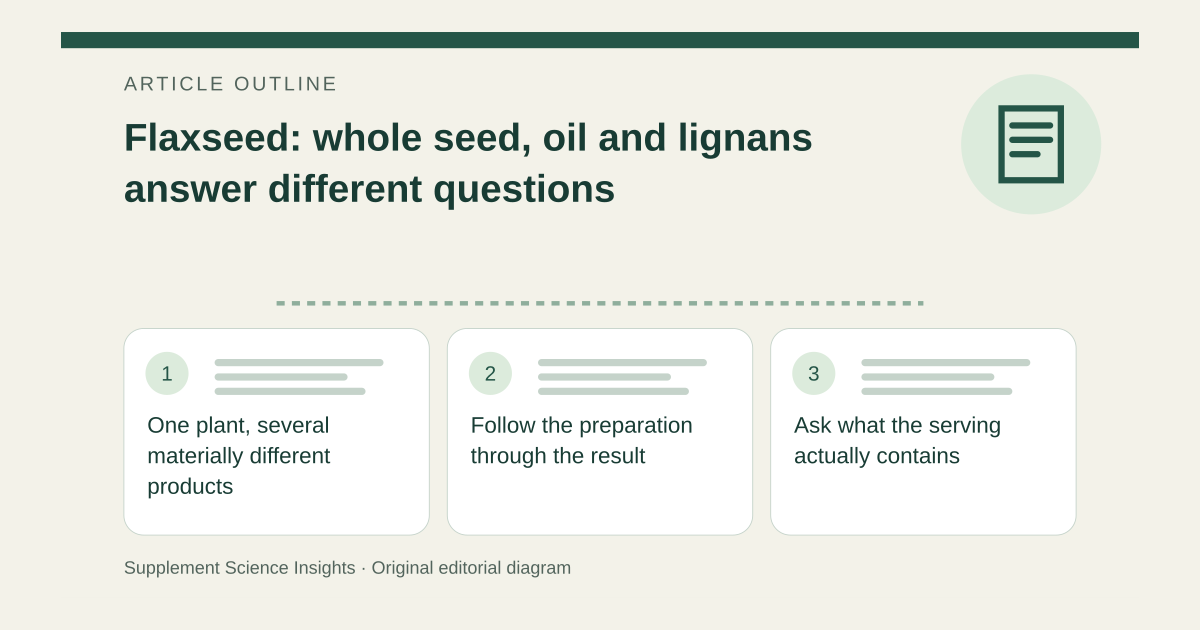
One plant, several materially different products
Flaxseed comes from Linum usitatissimum and is also called linseed. The whole seed, an oil, a mucilage preparation and an isolated lignan extract are not interchangeable. An oil-based omega-3 claim concerns a different material from a study of a fiber-containing seed preparation. [1]
Alpha-linolenic acid is often abbreviated ALA. That abbreviation should be written out when comparing products because other supplement ingredients also use the same initials. A familiar plant name or abbreviation cannot establish composition. [1]
Follow the preparation through the result
NCCIH describes research of varying quality. One trial suggested a weight-related benefit from flaxseed mucilage mixed with water, while flaxseed oil and lignan extracts have not shown the same weight-loss benefit. That distinction prevents a result for one component from becoming a claim for every flax product. [1]
Some glucose-related research is preliminary and population-specific. Findings in gestational diabetes do not establish a general diabetes treatment or settle pregnancy safety. Microbiome or inflammation research also requires clinical outcomes before it can support a broad health promise. [1]
Ask what the serving actually contains
For a food, the nutrition panel can help identify fiber and fat amounts. For a supplement, look for the named material and its declared components. Do not assign a seed's full nutritional profile to an oil capsule simply because both use the word flax.
Likewise, grams of total oil are not automatically grams of ALA. A declared percentage can support arithmetic, but it does not establish a clinical effect. Preparation-specific evidence is more useful than ranking products by the largest number printed on the front.
Digestive effects and medicine context matter
Higher supplemental amounts may cause fullness, bloating or diarrhea. NCCIH advises against eating raw or unripe seeds because potentially toxic compounds can be present. Short-term tolerability findings do not establish unrestricted long-term use. [1]
Potential interactions with anticoagulant or antiplatelet medicines are a reason for professional discussion. Pregnancy findings are uncertain, and breastfeeding information is limited; oil and seed preparations should not borrow safety conclusions from one another. [1]
Calculate the declared component
Imagine a fictional oil serving contains 1,200 mg total oil and explicitly declares 50 percent ALA. The declared ALA amount is 600 mg. A second label listing only 1,200 mg flaxseed oil leaves the ALA quantity unresolved.
Neither number gives the fiber content of ground seed or identifies a dose that improves a clinical outcome. The example is a composition calculation, not a recommendation.
| Fictional label | What can be calculated |
|---|---|
| 1,200 mg oil; 50% ALA | 600 mg declared ALA |
| 1,200 mg oil; no composition | ALA amount unresolved |
| Oil amount alone | Does not establish fiber content |
Choose the right evidence category
Read a flaxseed claim alongside its exact preparation. Whole-food use, isolated fiber, oil and lignans each need their own comparison. This page explains those distinctions without converting preliminary metabolic findings into a treatment plan.
Sources for this article
- NCCIH — Flaxseed: Usefulness and Safety
Source consulted: 2026-09-17. This is a reference resource, not a claim that we conducted the studies or tested a product.