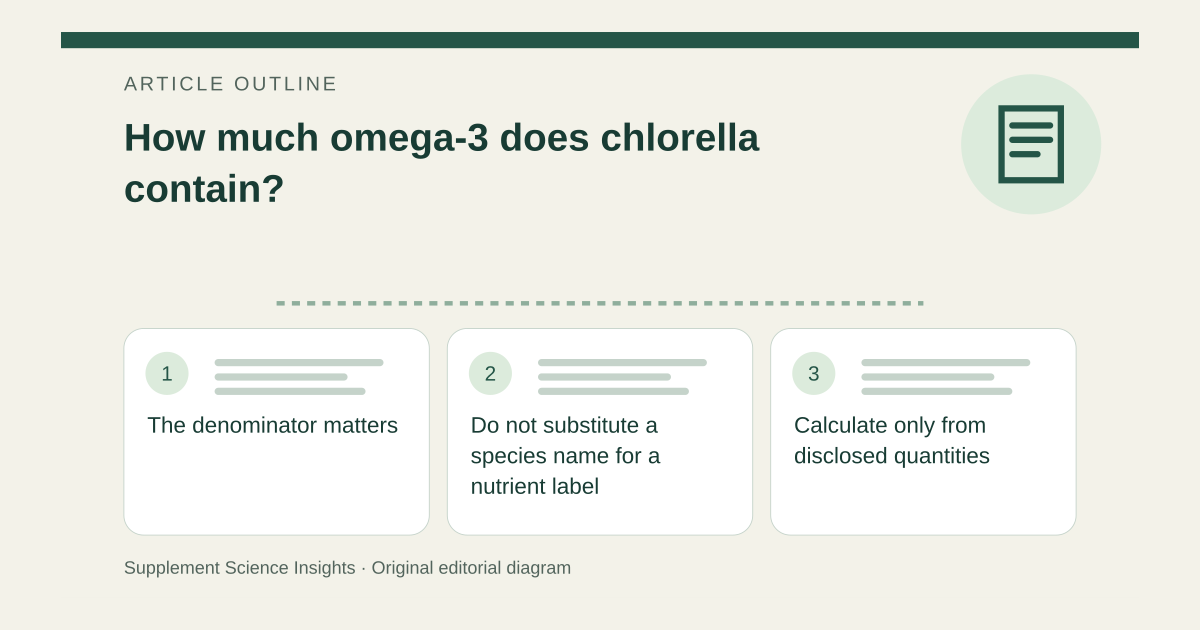
The denominator matters
The inspected review describes alpha-linolenic acid as roughly 10–16% of total fatty acids in the commercial preparations it discusses. That is not 10–16% of the whole tablet or powder. Much of the product is protein, carbohydrate and other material; cultivation conditions also change composition. [1]
Do not substitute a species name for a nutrient label
The reviewed products did not provide the EPA and DHA found in some other marine oils. This does not mean all algae have the same profile. If the goal is a measured omega-3 intake, look for the named fatty acid and its amount per serving instead of assigning a generic algae value. [1]
Calculate only from disclosed quantities
Imagine a hypothetical serving contains 200 mg of measured total fatty acids, of which 12% is ALA. That would be 24 mg ALA, not 12% of the entire serving weight. Without those measurements, the calculation is unavailable. Check the full formula and medication compatibility before treating chlorella as a nutrient replacement. [1][2]
| Detail | Meaning |
|---|---|
| Total fatty acids | 200 mg |
| ALA share | 12% |
| ALA amount | 24 mg |
Sources for this article
- Potential of Chlorella as a Dietary Supplement to Promote Human Health - PMC
Source consulted: 2026-09-21. This is a reference resource, not a claim that we conducted the studies or tested a product. - Dietary Supplements: What You Need to Know - Consumer
Source consulted: 2026-09-21. This is a reference resource, not a claim that we conducted the studies or tested a product.