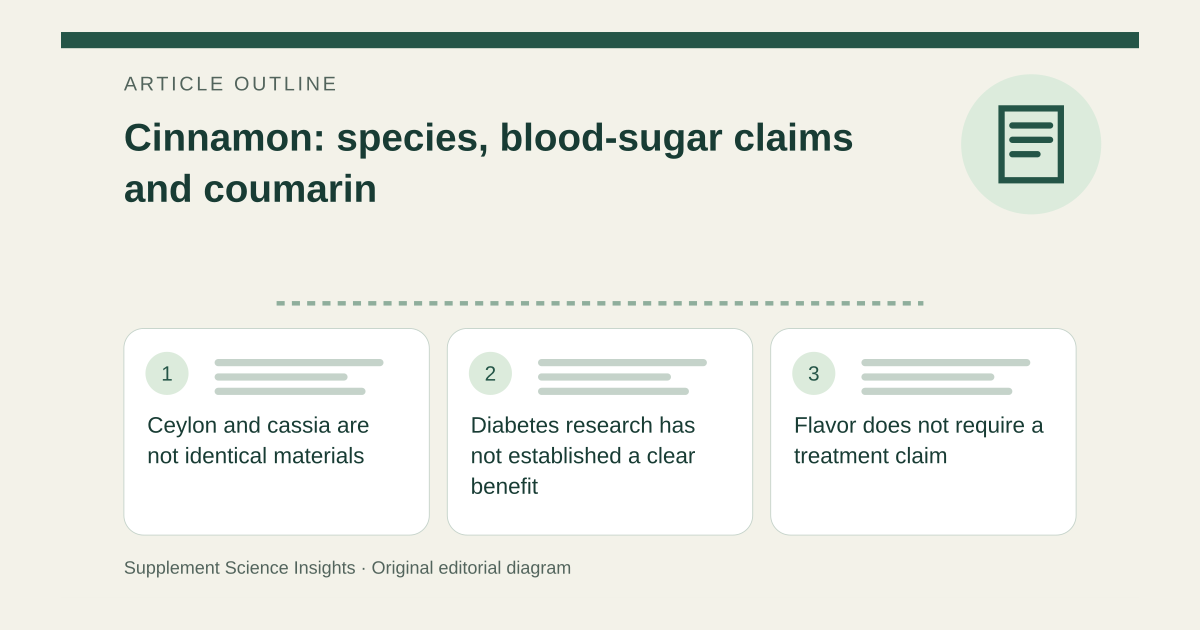
Ceylon and cassia are not identical materials
Cinnamon products can come from different species and plant parts. Ceylon cinnamon and cassia-type cinnamons differ chemically, including in their typical coumarin content. A product labeled only cinnamon leaves an important identity question unanswered. [1]
A teaspoon used in cooking, a concentrated extract and an essential oil are also different exposures. Research findings should retain the form and route rather than treating the botanical name as a universal intervention. [1]
Diabetes research has not established a clear benefit
Many studies have investigated cinnamon and glucose-related outcomes, but NCCIH finds the results difficult to interpret and insufficient to clearly support a health-condition use. Species and preparation are sometimes unclear, and study findings are inconsistent. [1]
A change in fasting glucose is not the same as fewer diabetes complications or a safe reduction in prescribed medication. Keep background treatment and the measured outcome attached to the result before deciding whether the finding is relevant. [1]
Flavor does not require a treatment claim
Cinnamon can be chosen as a flavoring without describing it as a glucose-lowering therapy. Culinary use and a planned daily supplement regimen raise different questions about exposure, consistency and evidence.
For a concentrated product, check the species, plant part and actual extract amount. A ratio such as 10:1 is not an automatic measure of potency or a validated conversion to a household spoonful of spice.
A favorable laboratory result also needs its uncertainty reported. Small changes with wide confidence intervals should not be presented as predictable changes that an individual reader can expect after buying a supplement.
Coumarin and liver context matter
Some cassia products contain appreciable coumarin, and prolonged exposure may be a concern for susceptible people, including those with liver disease. Ceylon cinnamon usually contains much less, but a species label alone does not assay a particular product. [1]
Larger amounts can cause gastrointestinal symptoms or allergy, and medicine interactions are possible. Cinnamon powder should not be swallowed as an internet challenge. Pregnancy or breastfeeding use beyond ordinary food amounts requires particular caution. [1]
An extract ratio cannot answer every comparison
Imagine A lists 500 mg cinnamon bark powder. B lists 100 mg of a 5:1 extract. The ratio may describe starting material relative to extract, but it does not establish identical chemical composition, coumarin exposure or clinical effects.
If B also lacks a species declaration, that uncertainty remains even when the ratio arithmetic looks neat. These fictional entries illustrate why an apparent fivefold conversion is not proof of equivalence or a dosing recommendation.
| Fictional product | Unresolved comparison |
|---|---|
| 500 mg bark powder | Species and composition needed |
| 100 mg, 5:1 extract | Not proven equivalent to powder |
| No species stated | Coumarin profile unresolved |
Keep nutrition and diabetes care separate
A supplement should not replace prescribed diabetes management. For a claim about cinnamon, ask which preparation was tested and what changed in people. The reference here explains why a familiar spice and a plausible mechanism are insufficient to settle that clinical question.
Sources for this article
- NCCIH — Cinnamon: Usefulness and Safety
Source consulted: 2026-09-17. This is a reference resource, not a claim that we conducted the studies or tested a product.