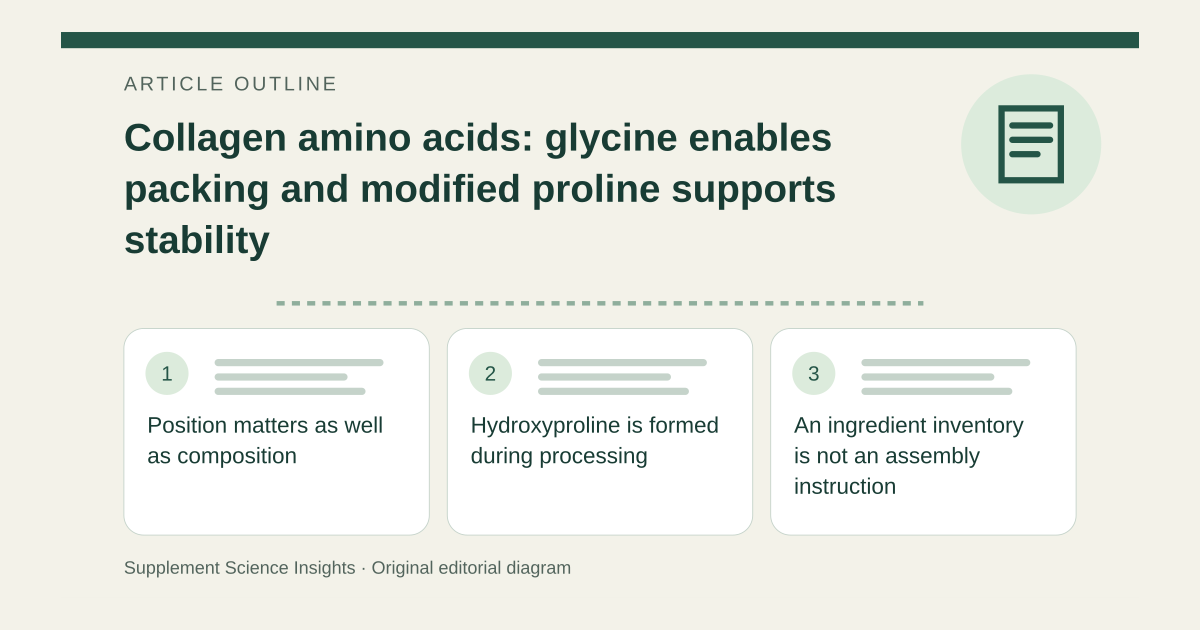
Position matters as well as composition
In collagen’s triple-helical regions, glycine occupies every third position. Its small side chain permits the three chains to pack closely. Proline and modified residues such as hydroxyproline are also prominent in collagen structure. [1]
An amino-acid percentage does not reveal where each residue sits in a chain or how the chain folds. Sequence and processing therefore matter alongside the total amount of each constituent. A mixture containing similar amino acids is not automatically the same molecular structure. [1]
Hydroxyproline is formed during processing
Cells modify selected proline and lysine residues after making the precursor chains. Vitamin C-dependent hydroxylation contributes to proper collagen structure. This explains a nutritional requirement without establishing that taking extra precursor amino acids or vitamin C above adequate intake improves a particular tissue outcome. [1]
The pathway is controlled by enzymes and cellular organization. It is not a recipe in which mixing powders outside the body produces a mature collagen fiber. A claimed benefit for skin, bone or joints needs evidence beyond the ingredient list. [1]
An ingredient inventory is not an assembly instruction
Imagine two materials contain the same proportions of three building blocks but place them in different sequences. The inventory matches; the arrangement does not. Likewise, amino-acid composition alone cannot establish that two proteins have the same structure or function.
| Level or observation | Meaning |
|---|---|
| Composition | Which amino acids are present |
| Sequence | Where they occur |
| Processing and folding | How the structure is formed |
Sources for this article
- StatPearls: Biochemistry, Collagen Synthesis
Source consulted: 2026-09-17. This is a reference resource, not a claim that we conducted the studies or tested a product.