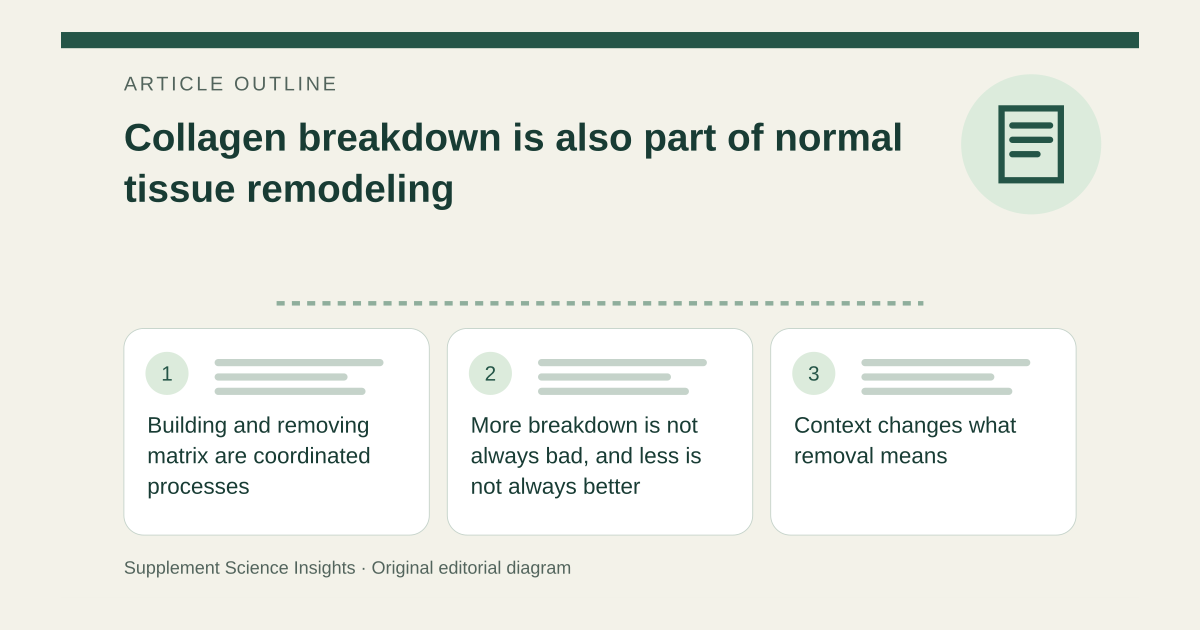
Building and removing matrix are coordinated processes
MedlinePlus describes matrix metallopeptidase 2, encoded by MMP2, as an enzyme involved in extracellular-matrix remodeling. One recognized substrate is type IV collagen, an important component of basement membranes. Its activity participates in processes including tissue repair and bone remodeling. [1][2]
The extracellular-matrix textbook also describes localized protein cleavage helping cells move through matrix. Removing material in a controlled place can be part of normal biological work, rather than evidence that the whole tissue is deteriorating. [1][2]
More breakdown is not always bad, and less is not always better
A claim to stop collagen degradation needs to specify the tissue, enzyme, degree and clinical setting. Preventing all turnover would not be the same as preserving healthy function. Normal renewal and harmful destruction cannot be distinguished by the word breakdown alone. [1][2]
These mechanistic sources do not establish a supplement or diet that selectively blocks unwanted degradation while preserving useful remodeling. Nor does an enzyme finding in a laboratory identify a treatment dose. A clinical claim needs evidence for the actual intervention and outcome. [1][2]
Context changes what removal means
Imagine a repair process removes damaged material before rebuilding. Counting only the removed material could make repair look like deterioration. A meaningful assessment considers why, where and when the removal occurred, as well as what followed it.
| Level or observation | Meaning |
|---|---|
| Localized matrix cleavage | Can support normal processes |
| Uncontrolled tissue damage | A different situation |
| A blanket anti-breakdown claim | Too broad to establish benefit |
Sources for this article
- MedlinePlus Genetics: MMP2
Source consulted: 2026-09-17. This is a reference resource, not a claim that we conducted the studies or tested a product. - Molecular Biology of the Cell, 4th edition: The Extracellular Matrix of Animals
Source consulted: 2026-09-17. This is a reference resource, not a claim that we conducted the studies or tested a product.