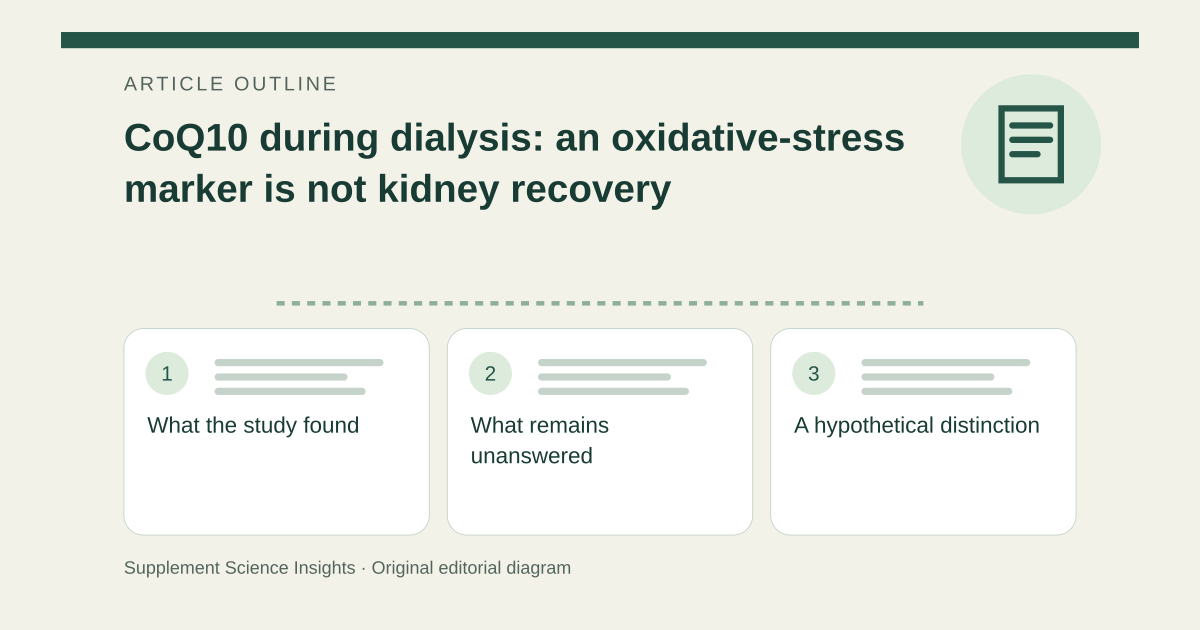
What the study found
Eighty people on maintenance hemodialysis were randomized to two CoQ10 regimens or placebo for four months. Fifteen without a postbaseline visit were excluded, leaving 65 in the primary analysis. [1]
The higher tested regimen significantly reduced F2-isoprostanes relative to placebo; the lower regimen did not. Other oxidative and cardiac biomarkers and predialysis blood pressure did not significantly differ. [1]
What remains unanswered
The study was small and had baseline group differences. A laboratory marker is not direct evidence of kidney recovery, fewer cardiovascular events or freedom from dialysis. Funding and conflicts were not established from the abstract; high research doses are not personal instructions. [1]
A hypothetical distinction
Imagine a blood marker falls while the study does not measure recovery of organ function. Calling the result organ repair would add an outcome that was never demonstrated.
| Detail | Interpretation |
|---|---|
| 80 randomized | 65 analyzed |
| Four months | Limited follow-up |
| Kidney recovery | Not established |
Sources for this article
- Effect of Coenzyme Q10 on Biomarkers of Oxidative Stress and Cardiac Function in Hemodialysis Patients: The CoQ10 Biomarker Trial - PubMed
Source consulted: 2026-09-19. This is a reference resource, not a claim that we conducted the studies or tested a product.