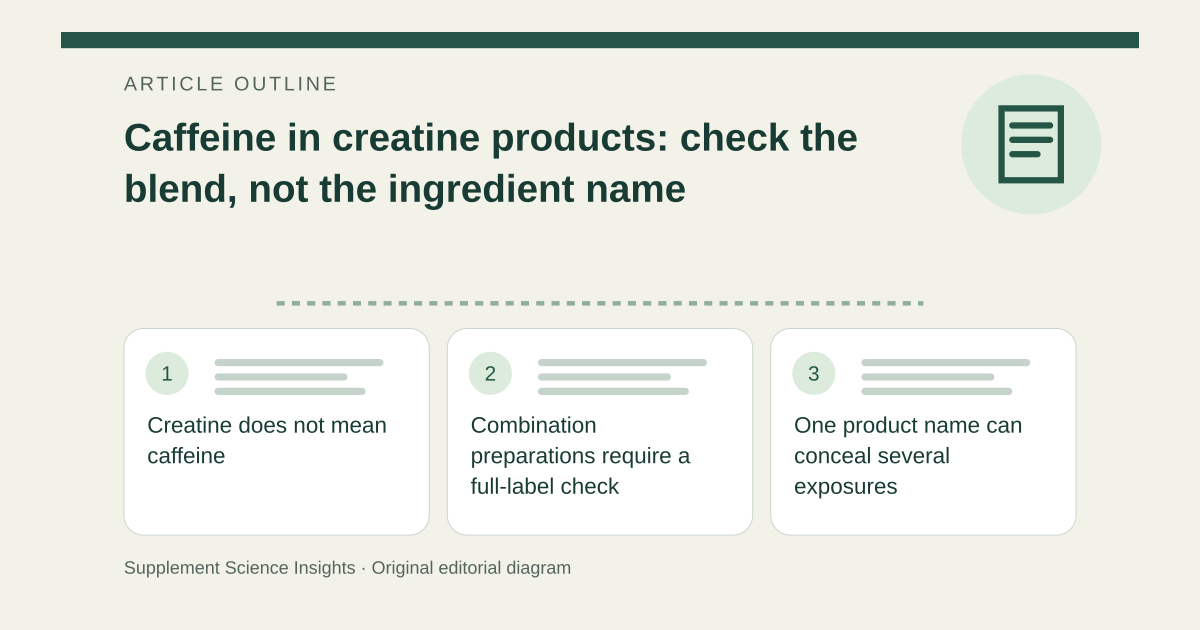
Creatine does not mean caffeine
NIH ODS treats creatine and caffeine as separate performance-supplement ingredients. Creatine’s role in rapid muscle-energy buffering is not a statement that it supplies caffeine. [1]
The word energy is used in several ways in marketing. A biochemical energy pathway and a subjective stimulant effect should not be treated as the same claim. [1]
Combination preparations require a full-label check
FDA notes that caffeine can be present in dietary supplements and other products beyond ordinary coffee or tea. Read the ingredient and serving information instead of assuming a creatine-branded pre-workout is caffeine-free. [2]
If sleep disruption or stimulant-type symptoms occur, account for the whole formulation and other caffeine sources. The presence of creatine does not identify which ingredient caused a response. [2]
One product name can conceal several exposures
Imagine a pre-workout lists creatine plus caffeine, while another product lists only creatine monohydrate. The shared creatine ingredient does not make their caffeine content equivalent.
| Detail | Interpretation |
|---|---|
| Creatine | Separate from caffeine |
| Pre-workout blend | May contain both |
| Total caffeine | Includes other sources |
Sources for this article
- Dietary Supplements for Exercise and Athletic Performance - Health Professional Fact Sheet
Source consulted: 2026-09-17. This is a reference resource, not a claim that we conducted the studies or tested a product. - Spilling the Beans: How Much Caffeine is Too Much? | FDA
Source consulted: 2026-09-17. This is a reference resource, not a claim that we conducted the studies or tested a product.