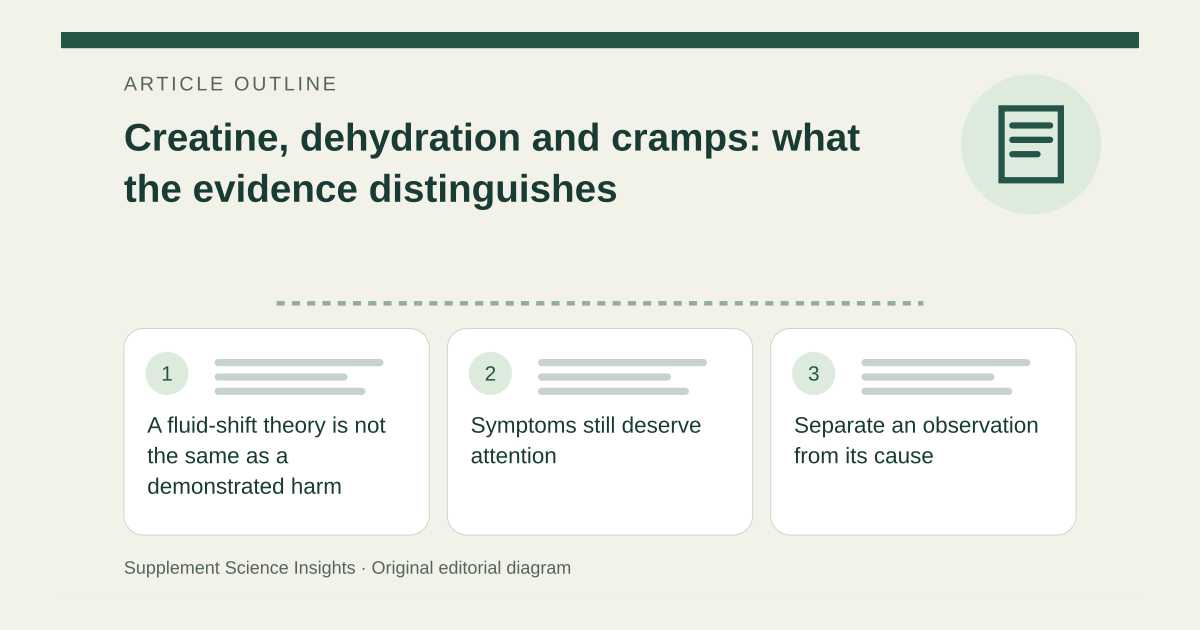
A fluid-shift theory is not the same as a demonstrated harm
Because creatine can increase water within muscle, a theory developed that it would leave too little fluid elsewhere during exercise. That mechanism alone does not establish dehydration, heat illness or muscle cramps. [1][2]
The 2021 review contrasts anecdotal reports with experimental and clinical evidence, which it says does not validate a general claim that creatine causes dehydration and cramping. [1][2]
Symptoms still deserve attention
ODS lists gastrointestinal upset, cramps and heat intolerance among anecdotal reactions, while noting no consistent adverse-effect pattern apart from weight gain. These statements can coexist: a reported symptom does not establish its cause or its frequency in a controlled comparison. [1][2]
Exercise intensity, heat, fluid losses and use of multiple products complicate attribution. A person who develops concerning symptoms should not dismiss them merely because a population-level review is reassuring. [1][2]
Separate an observation from its cause
Imagine an athlete cramps during a hot practice while using creatine and several other supplements. The observation is a cramp during that practice; it does not isolate which factor caused it.
A comparison controlling relevant exposures can investigate causation more effectively than counting reports from users alone.
| Observation | Interpretation |
|---|---|
| A cramp occurred during use | An observed association |
| Creatine caused the cramp | A causal claim needing evidence |
| Creatine prevents all cramps | A different, unsupported promise |
Not evidence that creatine hydrates everyone or treats cramps
Lack of evidence for a general dehydration effect does not prove that creatine prevents every cramp or treats dehydration. Normal attention to fluids and exercising conditions remains relevant. [1][2]
No fixed extra-water requirement is derived here from a scoop size. The review is dated 2021, includes disclosed industry ties, and is not a current independent appraisal of every heat-exercise trial. [1][2]
Sources for this article
- NIH ODS: Dietary Supplements for Exercise and Athletic Performance
Source consulted: 2026-09-17. This is a reference resource, not a claim that we conducted the studies or tested a product. - Antonio et al. (2021): Common questions and misconceptions about creatine supplementation
Source consulted: 2026-09-17. This is a reference resource, not a claim that we conducted the studies or tested a product.