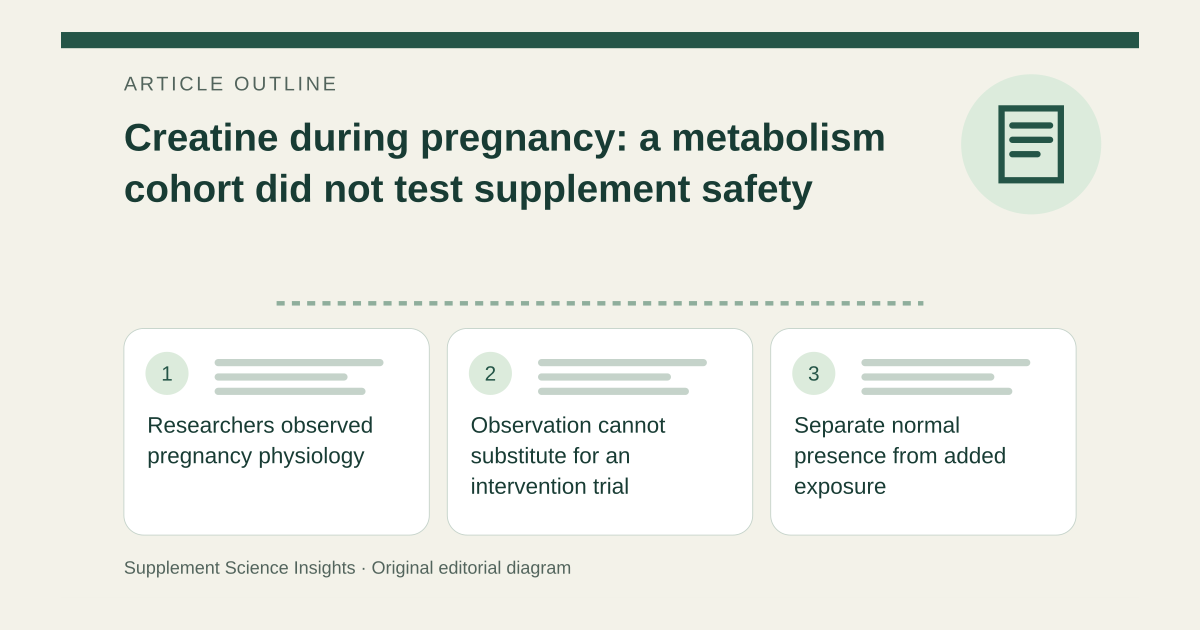
Researchers observed pregnancy physiology
The Australian cohort collected maternal blood and urine at five points from 10 to 36 weeks of pregnancy, along with cord blood and placental samples at birth. Dietary information was also collected. [1]
Maternal plasma creatine remained broadly stable while several measures of creatine metabolism changed during pregnancy. The investigators found no links between creatine and neonatal growth in this analysis. [1]
Observation cannot substitute for an intervention trial
Participants were not randomly assigned a creatine supplement or placebo. The study therefore cannot determine a safe supplement amount, benefits from supplementation or uncommon maternal and fetal adverse effects. [1]
The sample consisted of low-risk singleton pregnancies, further limiting transfer to other circumstances. Funding and conflicts were not established from the abstract. This physiology study should not be used as clearance to start creatine during pregnancy; discuss the specific product and reason with the pregnancy-care clinician. [1]
Separate normal presence from added exposure
Imagine a nutrient is detected in maternal blood. That establishes its presence, not the safety or usefulness of increasing exposure through a concentrated supplement.
| Detail | Interpretation |
|---|---|
| Prospective cohort | Observational design |
| 282 low-risk pregnancies | Defined population |
| Supplement safety | Not tested |
Sources for this article
- Creatine and pregnancy outcomes: a prospective cohort study of creatine metabolism in low-risk pregnant females - PubMed
Source consulted: 2026-09-19. This is a reference resource, not a claim that we conducted the studies or tested a product.