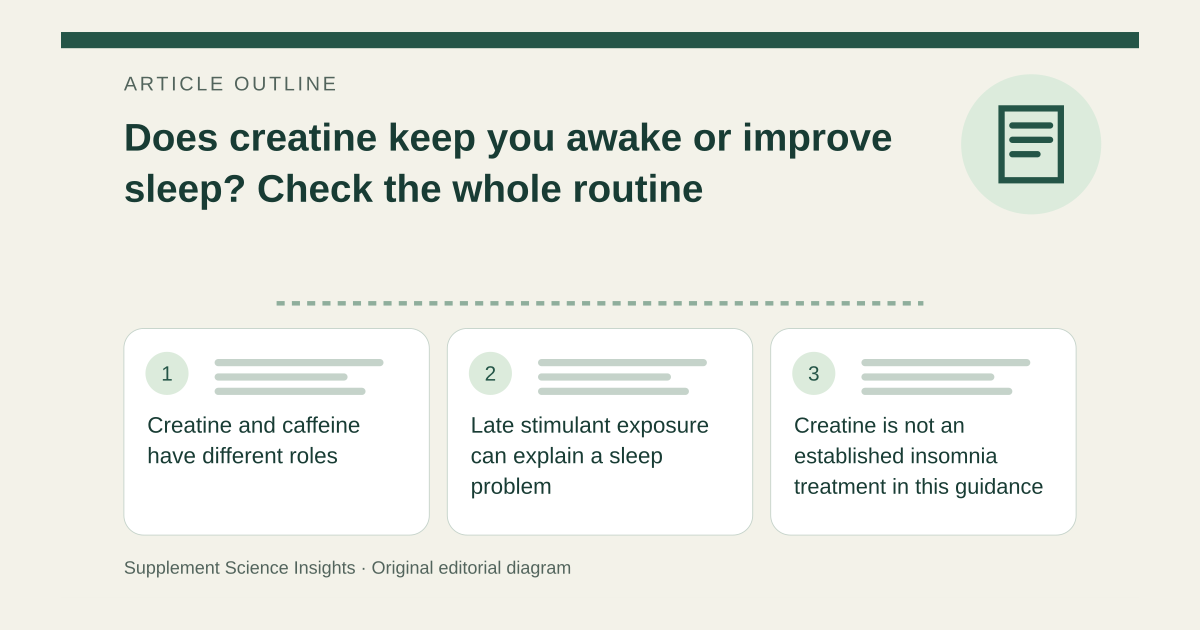
Creatine and caffeine have different roles
ODS discusses them as separate performance ingredients. Plain creatine monohydrate does not inherently contain caffeine, while a pre-workout may supply both. The marketing word energy does not identify which ingredient is present or what subjective effect to expect. [1][2]
Late stimulant exposure can explain a sleep problem
FDA identifies insomnia and sleep disruption among caffeine effects. NHLBI notes that caffeine can affect sleep for hours and recommends avoiding it close to bedtime. Count coffee, energy drinks and other supplements alongside the product under review. [2][3]
Creatine is not an established insomnia treatment in this guidance
The cited sleep guidance does not prescribe creatine to improve sleep or to replace lost sleep. A claim about performance while tired would require a different outcome from normal sleep quality and duration. Do not reduce sleep because a sports supplement is marketed for energy. [4][3][1]
Timing alone does not identify causation
Record product changes, training timing, caffeine and the sleep pattern. A consistent sleep schedule and an appropriate sleep environment are part of NHLBI guidance. Persistent insomnia deserves assessment rather than repeatedly changing creatine doses or adding another sleep supplement. [3][4]
Compare the complete before-and-after routine
Imagine a late workout includes a new creatine pre-workout and two coffees. Sleep difficulty that night does not isolate creatine as the cause. Examine each exposure and the routine before drawing a conclusion or searching for a universal creatine bedtime cutoff. [2][1][3]
| Detail | Reason to record it |
|---|---|
| Full supplement label | Identify caffeine and other ingredients |
| Other caffeine and timing | Assess combined exposure |
| Persistent sleep difficulty | Consider dedicated sleep assessment |
Sources for this article
- Dietary Supplements for Exercise and Athletic Performance - Health Professional Fact Sheet
Source consulted: 2026-09-21. This is a reference resource, not a claim that we conducted the studies or tested a product. - Spilling the Beans: How Much Caffeine is Too Much? | FDA
Source consulted: 2026-09-21. This is a reference resource, not a claim that we conducted the studies or tested a product. - Sleep Deprivation and Deficiency - Healthy Sleep Habits | NHLBI, NIH
Source consulted: 2026-09-21. This is a reference resource, not a claim that we conducted the studies or tested a product. - Sleep Disorders and Complementary Health Approaches: Usefulness and Safety | NCCIH
Source consulted: 2026-09-21. This is a reference resource, not a claim that we conducted the studies or tested a product.