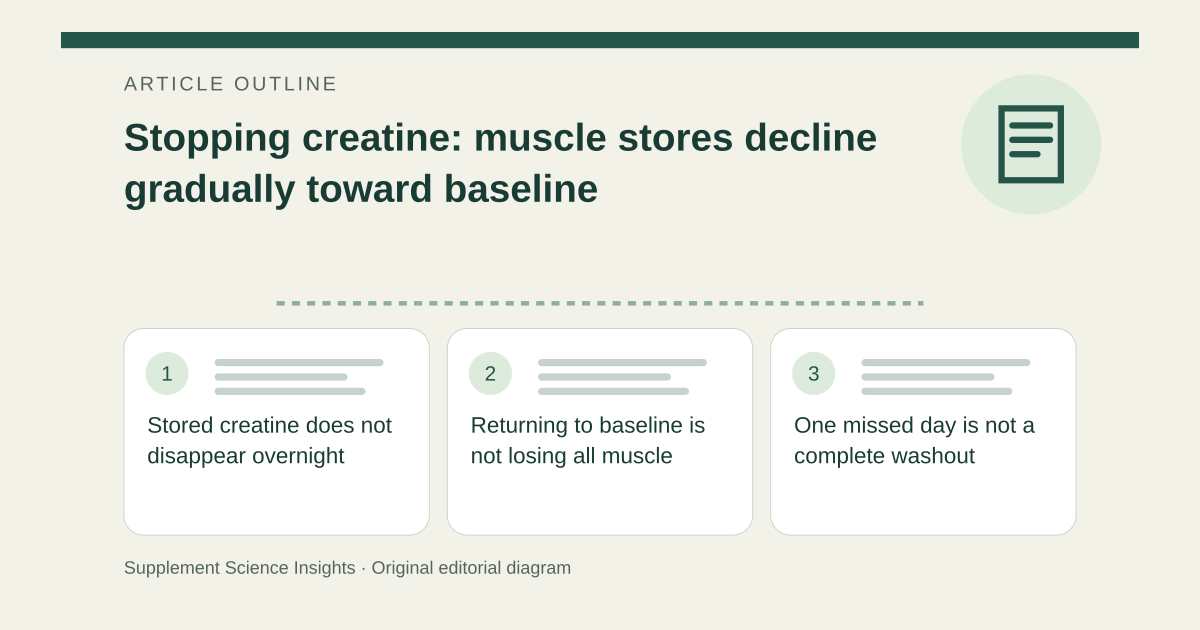
Stored creatine does not disappear overnight
The 2017 ISSN position stand describes roughly four to six weeks for elevated muscle stores to return toward baseline after stopping. This is an approximate physiological timeframe, not a guaranteed schedule for every person. [1]
A change in the circulating concentration after a dose is a different measurement from the total creatine pool in muscle. Those timescales should not be substituted for one another. [1]
Returning to baseline is not losing all muscle
The position stand reports no evidence that stores fall below baseline after cessation and does not support a claim of permanent shutdown of endogenous synthesis. Its authors disclose industry relationships. [1]
A decline in supplemented stores is not itself a measurement of muscle-tissue loss. Body weight, water and training adaptations need to be assessed separately. [1]
One missed day is not a complete washout
Imagine someone misses a day and assumes all accumulated muscle creatine is gone. The gradual-store model does not support that inference.
| Detail | Interpretation |
|---|---|
| Blood after a dose | Shorter-term concentration |
| Muscle pool | Gradual change |
| Baseline return | Not loss of all muscle |
Sources for this article
- International Society of Sports Nutrition position stand: safety and efficacy of creatine supplementation in exercise, sport, and medicine - PMC
Source consulted: 2026-09-18. This is a reference resource, not a claim that we conducted the studies or tested a product.