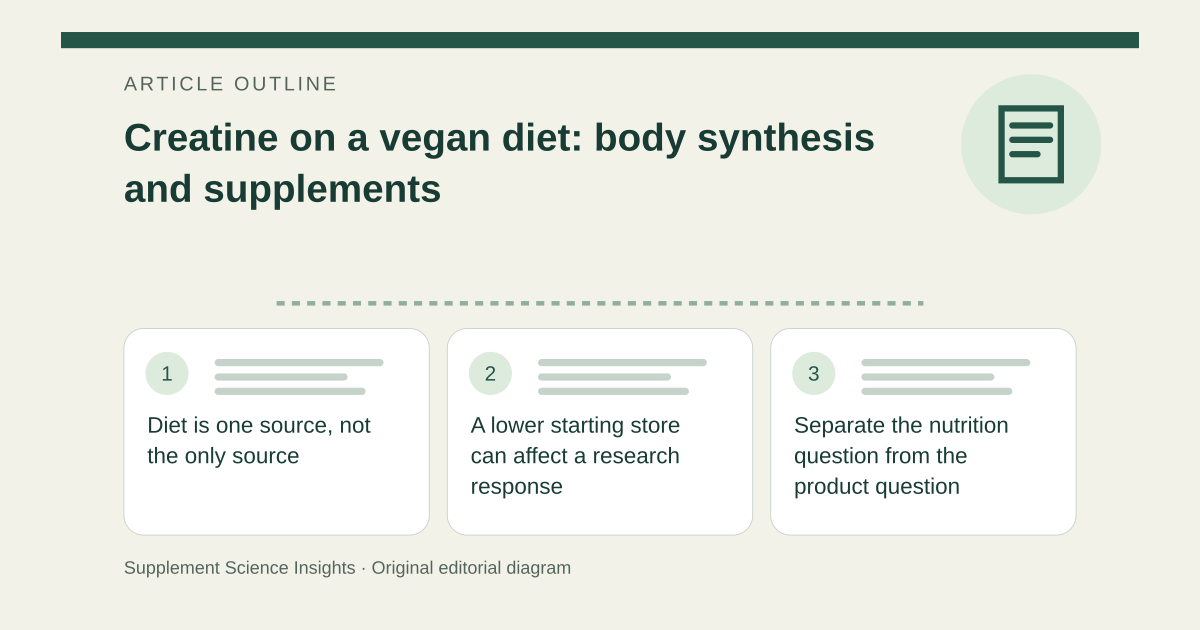
Diet is one source, not the only source
The liver and kidneys make creatine using amino acids. ODS describes endogenous production of about one gram per day and identifies meat and fish as dietary sources. [1]
Someone eating a vegan diet therefore does not have zero creatine simply because these animal foods are absent. The body’s synthesis and its existing stores must be distinguished from the amount directly supplied by food. [1]
A lower starting store can affect a research response
ODS notes that vegetarians may have lower muscle creatine content and may respond more to supplementation than meat eaters. This is a possible difference in response, not a diagnosis of deficiency in every vegan. [1]
Whether an exercise supplement is useful also depends on the activity and goal. Creatine evidence is strongest for repeated short, high-intensity efforts; a dietary category does not make every sport benefit equally. [1]
Separate the nutrition question from the product question
Imagine a vegan athlete asks both whether creatine could help training and whether a particular capsule fits their diet. Those are two different checks.
The performance question requires relevant exercise evidence. The product question requires information about the ingredient source, capsule and other components; the word creatine alone does not answer it.
| Observation | Interpretation |
|---|---|
| No meat or fish in the diet | Less direct dietary creatine |
| Body synthesis | Still contributes creatine |
| A particular capsule is vegan | Requires product-specific evidence |
Do not infer a universal requirement or a vegan label
The ODS summary does not establish that every vegan needs a creatine supplement. It also does not verify the manufacturing inputs or excipients of any retail product. [1]
This page therefore makes no product recommendation or vegan certification claim. It explains why lack of animal-food intake and lack of creatine in the body are not equivalent. [1]
Sources for this article
- NIH ODS: Dietary Supplements for Exercise and Athletic Performance
Source consulted: 2026-09-17. This is a reference resource, not a claim that we conducted the studies or tested a product.