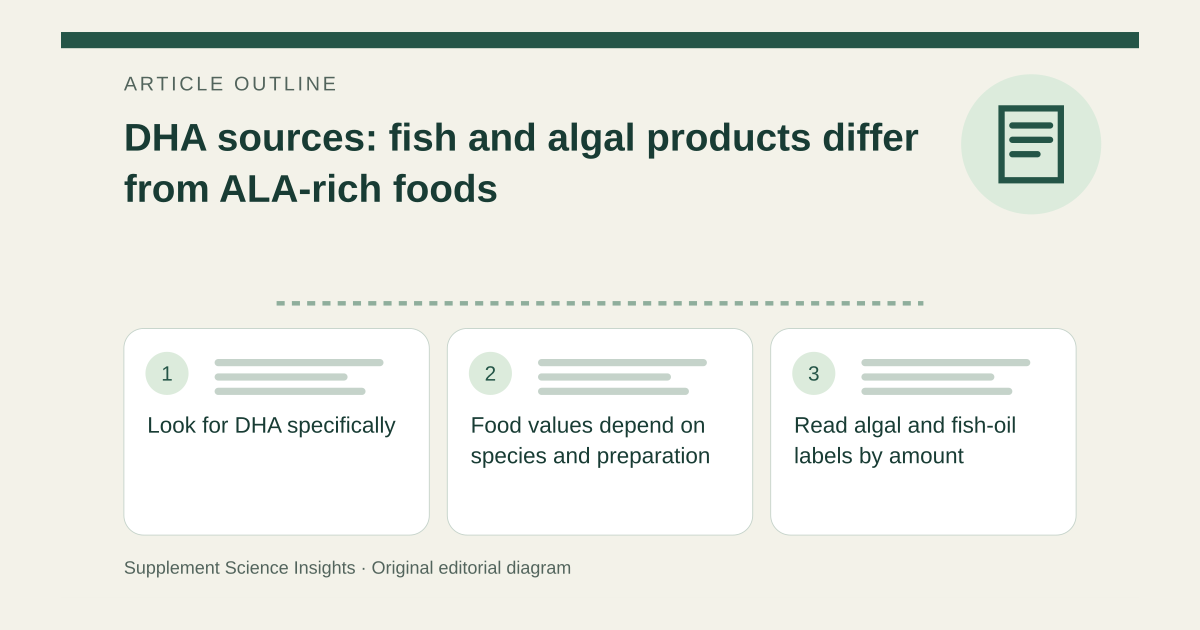
Look for DHA specifically
DHA is one long-chain omega-3 fatty acid. Fatty fish provide it, while flaxseed, walnuts and several plant oils mainly provide ALA. The body can convert some ALA to longer-chain omega-3s, but conversion is limited; grams of ALA should not be counted as the same grams of dietary DHA. [1]
Food values depend on species and preparation
The NIH ODS food table lists DHA of 1.24 g for 3 ounces cooked farmed Atlantic salmon,0.94 g for cooked Atlantic herring and 0.17 g for drained light tuna canned in water. These are selected reference entries, not a guarantee for every fish meal or a complete best-to-worst health ranking. [1]
Read algal and fish-oil labels by amount
Algal oil can supply DHA, and some formulations also contain EPA. Fish-oil amounts likewise vary. Imagine a label states 1,000 mg total oil but only 200 mg DHA: the DHA contribution is 200 mg, not 1,000 mg. Compare the serving sizes and declared DHA rather than inferring it from total oil weight. [1]
| Hypothetical label | DHA accounting |
|---|---|
| 1,000 mg oil containing 200 mg DHA | 200 mg DHA |
| Two such servings | 400 mg DHA |
| ALA amount only | Does not declare a direct DHA amount |
Sources for this article
- Omega-3 Fatty Acids - Health Professional Fact Sheet
Source consulted: 2026-09-20. This is a reference resource, not a claim that we conducted the studies or tested a product.