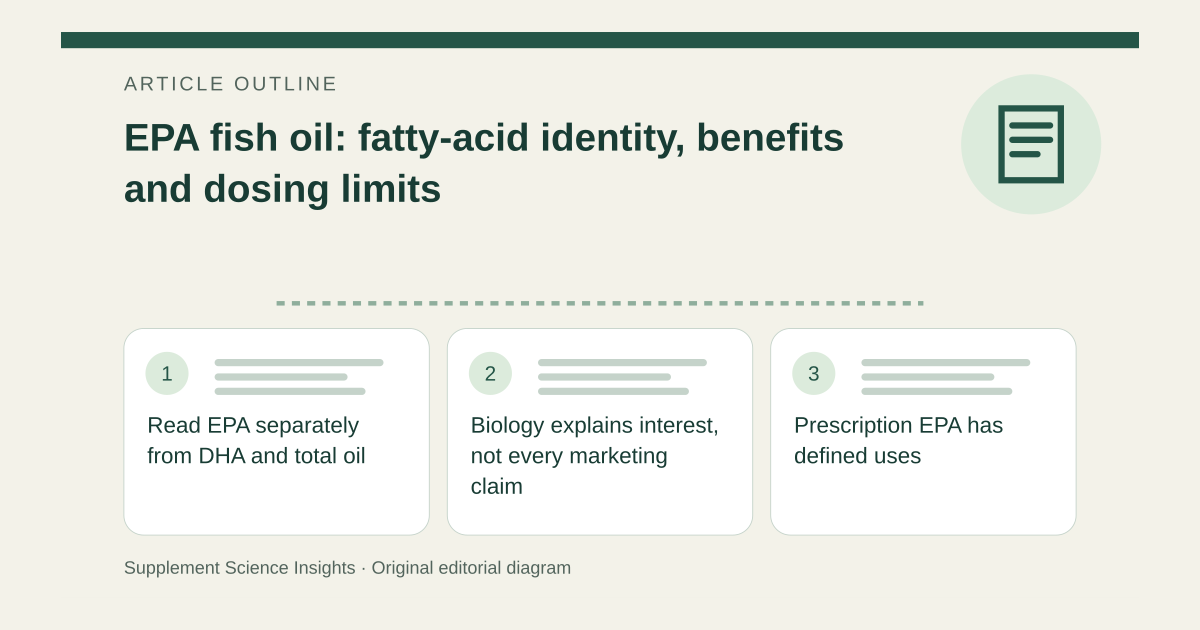
Read EPA separately from DHA and total oil
EPA and DHA are different fatty acids. A product can contain both in varying proportions, while the front label reports the larger total fish-oil amount. Compare the declared EPA per complete serving when an EPA amount is relevant; the same milligrams of total oil can supply different amounts. [1]
Biology explains interest, not every marketing claim
EPA contributes to cell membranes and signaling pathways. Omega-3s have been investigated for cardiovascular and inflammatory outcomes, but findings differ with preparation, population and outcome. A physiological role does not establish that extra EPA improves every person’s heart, mood or joints. [1]
Prescription EPA has defined uses
Icosapent ethyl is a particular prescription EPA-related medicine used for triglyceride lowering and cardiovascular-risk reduction in selected adults. MedlinePlus directs taking it with food twice daily according to the prescription. That schedule does not supply a universal dose for an unrelated retail EPA supplement. [2]
Do not select a dose from the word concentrated
There is no universal EPA supplement requirement for every adult. Medical treatment amounts differ from dietary intake, and the adult ALA adequate intake is not an EPA prescription. Review the actual EPA/DHA amount, medical goal and complete medication list before using a high-dose product. [1]
Monitor tolerability and clinically important symptoms
Fish-oil products can cause gastrointestinal effects. Prescription EPA information also warns about abnormal heartbeat, bleeding and allergic reactions. Discuss new symptoms with the prescriber, and seek urgent care for severe reactions. Do not substitute products or add another fish oil without reviewing total intake. [1][2]
A larger oil number can contain less EPA
Imagine one hypothetical serving supplies 1,000 mg total oil with 180 mg EPA, while another supplies 750 mg oil with 400 mg EPA. The second has more declared EPA despite less total oil. That comparison explains contents, not which dose the person should take. [1]
| Product | Total oil | EPA |
|---|---|---|
| A | 1,000 mg | 180 mg |
| B | 750 mg | 400 mg |
Sources for this article
- Omega-3 Fatty Acids - Health Professional Fact Sheet
Source consulted: 2026-09-21. This is a reference resource, not a claim that we conducted the studies or tested a product. - Icosapent Ethyl: MedlinePlus Drug Information
Source consulted: 2026-09-21. This is a reference resource, not a claim that we conducted the studies or tested a product.