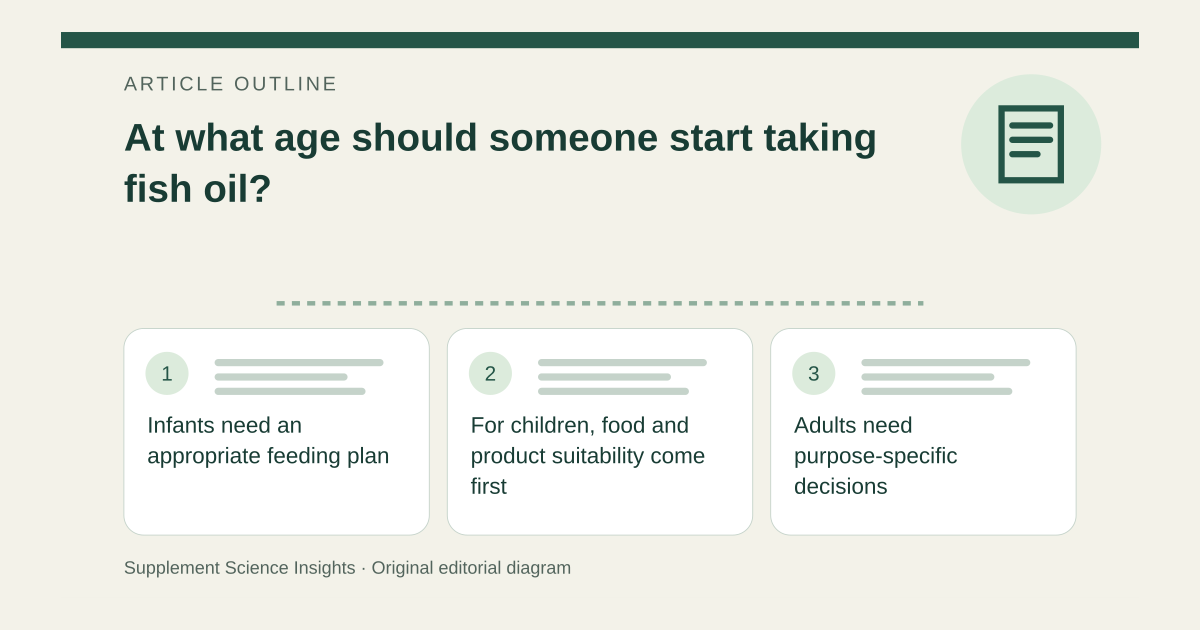
Infants need an appropriate feeding plan
Infant nutrition should be managed through the appropriate breast-milk or formula plan and pediatric advice. Do not add an adult fish-oil capsule or improvise a dose because DHA is important for development. The formulation and route matter as well as the nutrient. [1][2]
For children, food and product suitability come first
FDA/EPA provides age-based seafood serving advice and low-mercury choices. That food guidance is not a capsule prescription. NCCIH advises professional review before giving children complementary products; adult directions should not simply be scaled down. [3][2]
Adults need purpose-specific decisions
Dietary intake, pregnancy or breastfeeding, allergies, medicines and a diagnosed clinical indication can change the decision. In older adults, adding fish oil does not automatically prevent memory decline or replace cardiovascular treatment. [1][4]
Ask what the supplement would add
Imagine a family wants one fish-oil product for an infant, a teenager and an older adult. Their needs and suitable preparations differ. Review each person’s food intake, health context and reason for use rather than sharing a standard serving. [2][5]
| Question | Evidence boundary |
|---|---|
| Infant | Pediatric feeding plan |
| Child | Age-appropriate food and product review |
| Adult | Defined dietary or clinical reason |
| Older adult | Medicines and goals matter |
Sources for this article
- Omega-3 Fatty Acids - Health Professional Fact Sheet
Source consulted: 2026-09-21. This is a reference resource, not a claim that we conducted the studies or tested a product. - Children and the Use of Complementary Health Approaches | NCCIH
Source consulted: 2026-09-21. This is a reference resource, not a claim that we conducted the studies or tested a product. - Advice about Eating Fish | FDA
Source consulted: 2026-09-21. This is a reference resource, not a claim that we conducted the studies or tested a product. - Omega-3 Supplements: What You Need To Know | NCCIH
Source consulted: 2026-09-21. This is a reference resource, not a claim that we conducted the studies or tested a product. - Dietary Supplements: What You Need to Know
Source consulted: 2026-09-21. This is a reference resource, not a claim that we conducted the studies or tested a product.