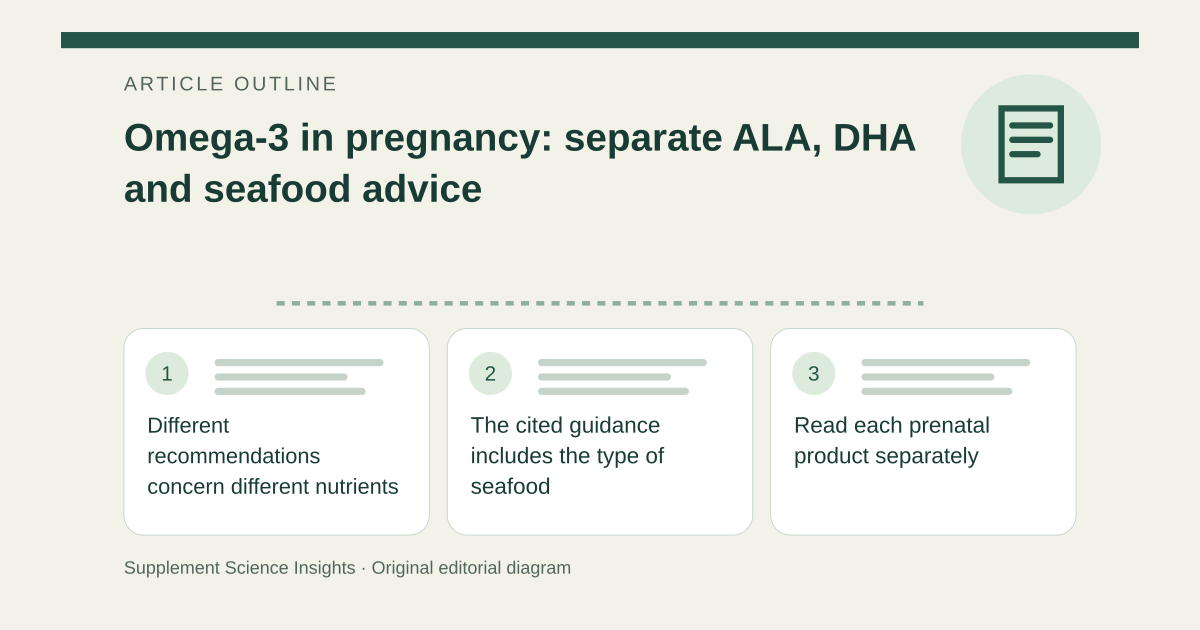
Different recommendations concern different nutrients
The U.S. adequate intake for ALA during pregnancy is 1.4 grams daily. ODS states that the corresponding U.S. reference framework did not establish a specific intake recommendation for EPA or DHA. [1]
Other organizations provide DHA or EPA-plus-DHA guidance. Those figures should not be mixed with ALA as though they were the same fatty acid or treated as a single universal capsule instruction. [1]
The cited guidance includes the type of seafood
The ODS 2025 summary reports FDA and ACOG advice to consume eight to twelve ounces weekly of seafood lower in mercury during pregnancy. The lower-mercury qualification is part of the advice, not an optional detail. [1]
For someone eating no seafood, discussion with the prenatal clinician can address whether a direct DHA/EPA source is needed. Algal products may supply DHA and sometimes EPA, but their actual contents vary. [1]
Read each prenatal product separately
Imagine a prenatal product lists many vitamins but does not declare DHA or EPA. The word prenatal does not establish that these fatty acids are present.
If a second product is considered, its fatty-acid amounts and any added vitamins also need to be reviewed. Total fish-oil mass alone does not answer that question.
| Detail | Interpretation |
|---|---|
| ALA reference | A particular essential fatty acid |
| EPA/DHA recommendation | Different fatty acids and guidance context |
| Prenatal product name | Does not establish DHA content |
Do not borrow a high-dose regimen without its clinical context
ODS summarizes differing professional recommendations, including guidance for low DHA intake or status. Those targeted recommendations are not automatically appropriate for every pregnancy. [1]
Cod liver oil can also add vitamins A and D. This page does not select a prenatal product, prescribe a dose or replace individualized prenatal nutrition advice. [1]
Sources for this article
- NIH ODS: Omega-3 Fatty Acids
Source consulted: 2026-09-17. This is a reference resource, not a claim that we conducted the studies or tested a product.