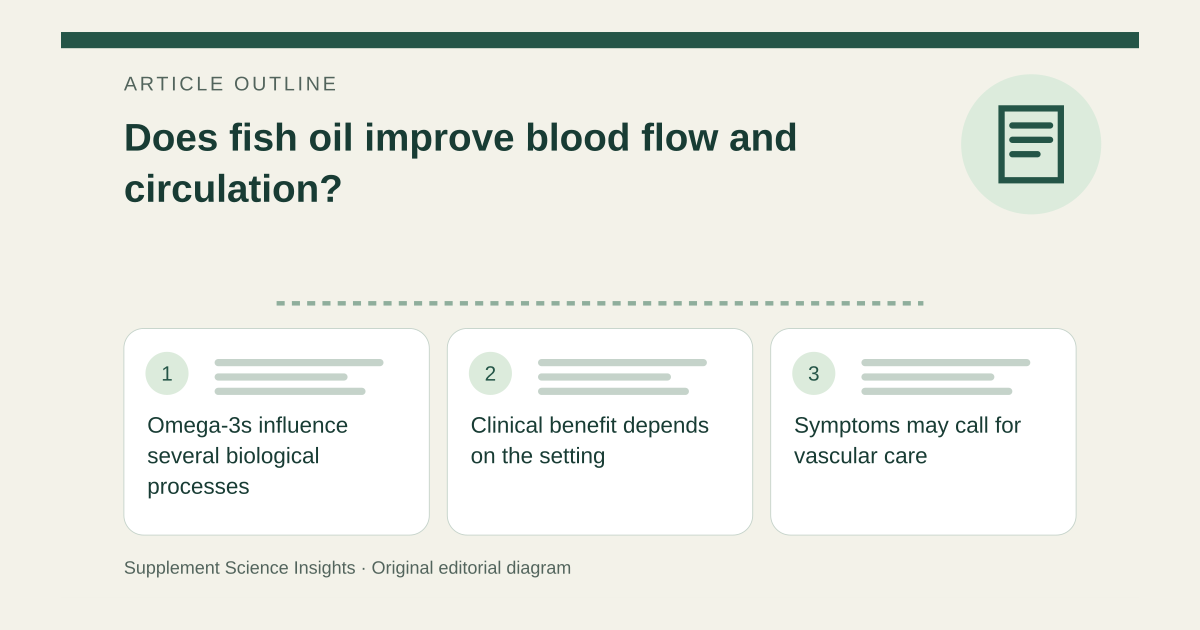
Omega-3s influence several biological processes
ODS describes roles in cell membranes and signaling, along with triglyceride-lowering effects of defined preparations. These findings do not mean a capsule mechanically clears plaque or reliably restores blood flow to an affected limb. [1]
Clinical benefit depends on the setting
Trials differ in baseline cardiovascular risk, dose and EPA/DHA formulation. Prescription products used for defined indications cannot simply be replaced with the same total milligrams of retail fish oil. [1][2]
Symptoms may call for vascular care
NHS guidance on peripheral arterial disease includes assessment, exercise, smoking cessation, medicines and sometimes procedures. Calf pain during walking that eases with rest is a reason to discuss the pattern, not diagnose an omega-3 deficiency. [3]
Avoid treating blood thinning as the goal
Imagine a person on an anticoagulant adds fish oil to improve circulation. Review the combination and intended outcome with the clinician. A platelet effect does not establish a better circulation treatment or justify escalating the amount. [1][3]
| Claim or observation | Interpretation |
|---|---|
| Triglyceride reduction | A risk-marker effect |
| Leg symptoms | Need cause-specific assessment |
| Blood-thinning claim | Not a treatment goal by itself |
| Prescription versus retail | Formulations differ |
Sources for this article
- Omega-3 Fatty Acids - Health Professional Fact Sheet
Source consulted: 2026-09-21. This is a reference resource, not a claim that we conducted the studies or tested a product. - Dietary Supplements: What You Need to Know
Source consulted: 2026-09-21. This is a reference resource, not a claim that we conducted the studies or tested a product. - Peripheral arterial disease (PAD) - Treatment - NHS
Source consulted: 2026-09-21. This is a reference resource, not a claim that we conducted the studies or tested a product.