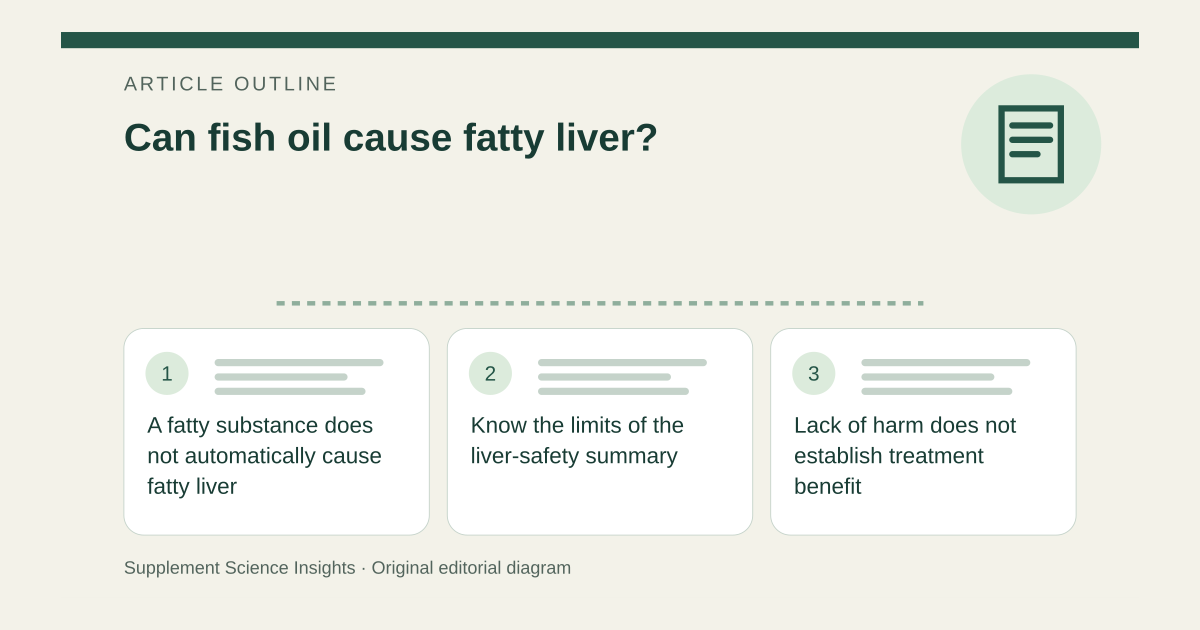
A fatty substance does not automatically cause fatty liver
The name fish oil describes an ingredient, not the metabolic cause of fat accumulation in the liver. A new fatty-liver diagnosis needs assessment of the full medical, dietary and exposure history rather than attributing it to any consumed oil. [1][2]
Know the limits of the liver-safety summary
The LiverTox chapter, updated in 2017, found no convincing link between omega-3 use and clinically apparent liver injury. Its fatty-liver discussion also did not identify worsening injury in the reviewed trials. This is an expert synthesis, not a guarantee about every current blend. [3]
Lack of harm does not establish treatment benefit
A lower blood triglyceride value is not the same as resolving liver fat, inflammation or scarring. Do not replace diagnosis-specific liver care with fish oil or increase an oil dose merely because liver tests remain abnormal. [3][1]
Review the whole label and timeline
Imagine fatty liver is discovered while taking an omega-3 blend with several herbs. Bring the full formula and previous results to the clinician. Timing alone cannot isolate fish oil, and other ingredients require their own safety assessment. [2]
| Claim or observation | Interpretation |
|---|---|
| Contains oil | Not proof of fatty-liver causation |
| Reassuring class evidence | Not every blend tested |
| Lower triglycerides | Not proof of liver recovery |
| New diagnosis | Assess the broader history |
Sources for this article
- NIDDK: Eating, Diet and Nutrition for NAFLD and NASH
Source consulted: 2026-09-21. This is a reference resource, not a claim that we conducted the studies or tested a product. - Dietary Supplements: What You Need to Know
Source consulted: 2026-09-21. This is a reference resource, not a claim that we conducted the studies or tested a product. - Omega-3 Fatty Acids - LiverTox - NCBI Bookshelf
Source consulted: 2026-09-21. This is a reference resource, not a claim that we conducted the studies or tested a product.