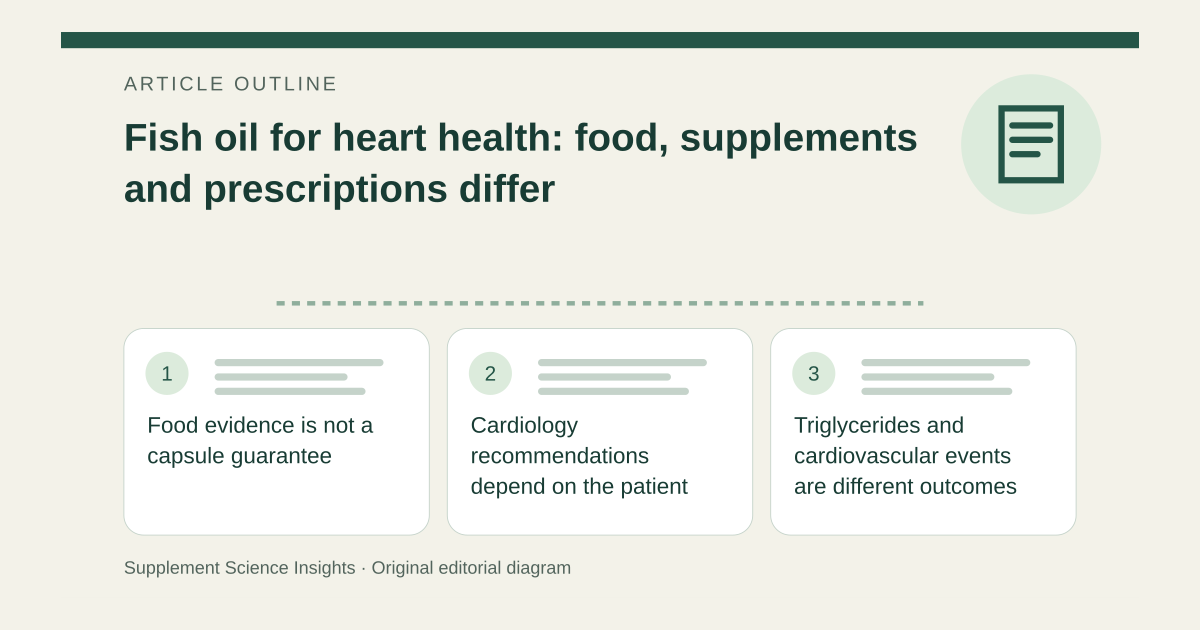
Food evidence is not a capsule guarantee
NIH distinguishes seafood-containing dietary patterns from trials of omega-3 supplements. A food supplies protein and other nutrients and may replace another food. Swallowing oil while keeping the rest of the diet unchanged is a different intervention, so the two kinds of evidence should not be combined into one promise. [1][2]
Cardiology recommendations depend on the patient
The NIH summary of American Heart Association guidance does not recommend omega-3 supplements for people without high cardiovascular risk. Prescription omega-3 treatment can be used for high triglycerides. A cardiologist may recommend a particular medicine for a selected patient without endorsing every over-the-counter fish-oil product. [1]
Triglycerides and cardiovascular events are different outcomes
Lowering a laboratory value is not the same as proving fewer heart attacks, strokes or deaths. NIH describes differing event results across high-dose formulations and populations. EPA-only prescription findings should not be transferred automatically to a mixed EPA/DHA supplement bought for general wellness. [1]
Consider the risks alongside the goal
Fishy taste and gastrointestinal symptoms can occur. Higher-dose regimens have raised atrial-fibrillation concerns in some trials, and medication review matters for people taking anticoagulants. Do not replace prescribed lipid or heart treatment with a supplement based on a front-label heart symbol. [1][3]
Ask what is being treated
Imagine one person is advised to eat fish regularly and another receives a prescription for persistently high triglycerides. Those are different recommendations for different reasons. Ask about the intended outcome, formulation, monitoring and duration rather than comparing only the milligrams of oil. [1][2]
| Advice | What it means |
|---|---|
| Include fish in meals | A dietary-pattern choice |
| Treat high triglycerides | A specific clinical indication |
| Take any fish oil for prevention | Not a universal cardiology recommendation |
Sources for this article
- Omega-3 Fatty Acids - Health Professional Fact Sheet
Source consulted: 2026-09-21. This is a reference resource, not a claim that we conducted the studies or tested a product. - Advice about Eating Fish | FDA
Source consulted: 2026-09-21. This is a reference resource, not a claim that we conducted the studies or tested a product. - Dietary Supplements: What You Need to Know
Source consulted: 2026-09-21. This is a reference resource, not a claim that we conducted the studies or tested a product.