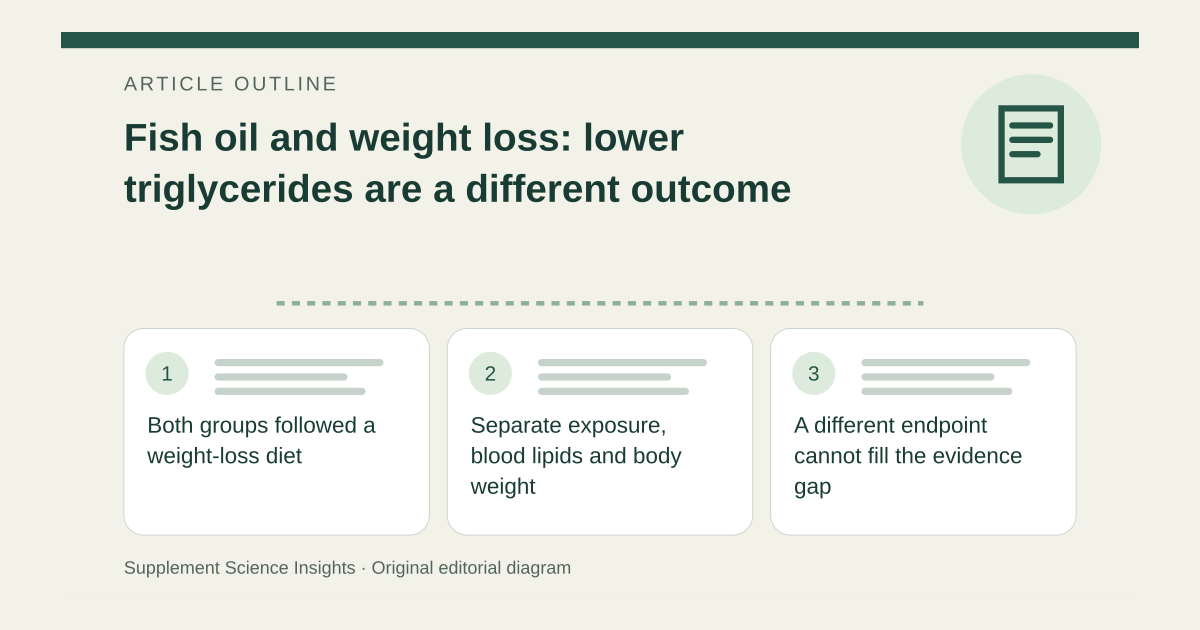
Both groups followed a weight-loss diet
The double-blind trial compared 17 participants receiving fish oil with 18 receiving a monounsaturated-oil placebo. Both groups followed a low-energy diet for 12 weeks. [1]
Average weight reduction was reported as 4.35% with fish oil and 3.37% with placebo, but the between-group difference was not statistically significant. The fat-mass comparison likewise did not establish an additional benefit. [1]
Separate exposure, blood lipids and body weight
Blood EPA and DHA increased in the fish-oil group, and triglycerides decreased. Those findings concern supplement exposure and a blood lipid measurement; they do not establish greater weight loss. [1]
The small sample and possible dietary-adherence problems limit certainty. Funding and conflicts were not fully assessed from the abstract. The defensible conclusion is that this study did not demonstrate added weight-loss efficacy, not that every conceivable omega-3 intervention has been ruled out. [1]
A different endpoint cannot fill the evidence gap
Imagine triglycerides improve while the weight difference from placebo remains uncertain. The triglyceride result cannot be used as proof that the supplement accelerated fat loss.
| Detail | Interpretation |
|---|---|
| 35 participants | Small trial |
| 12 weeks | Shared reduced-energy diet |
| Triglycerides | Different from body weight |
Sources for this article
- Dietary supplementation with long chain omega-3 polyunsaturated fatty acids and weight loss in obese adults - PubMed
Source consulted: 2026-09-19. This is a reference resource, not a claim that we conducted the studies or tested a product.