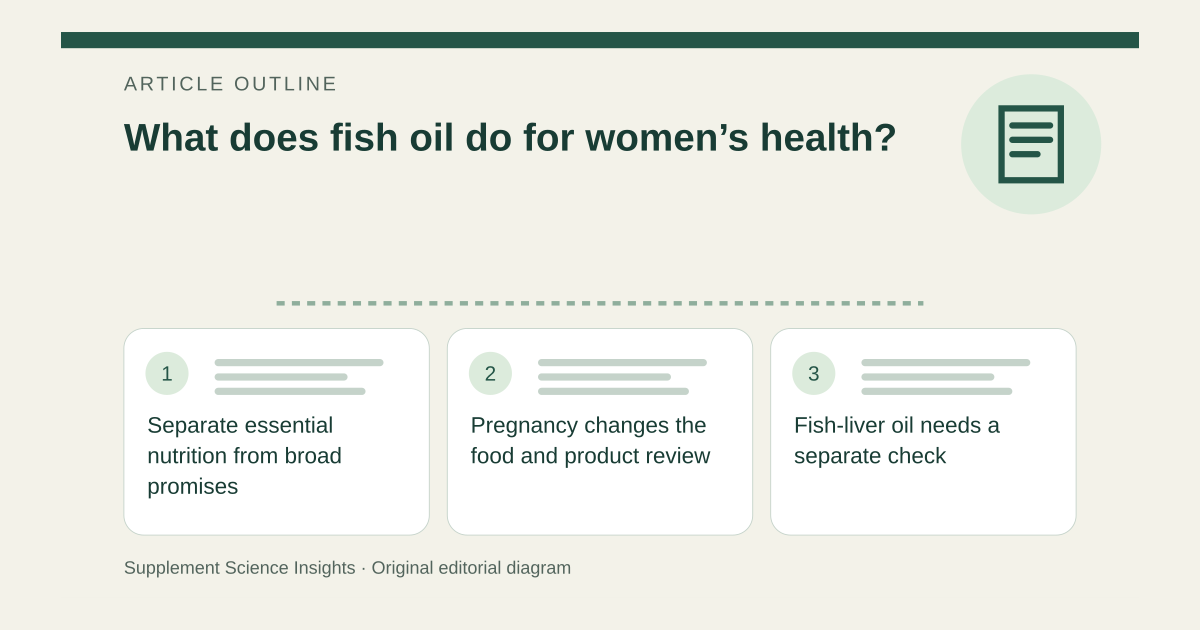
Separate essential nutrition from broad promises
The body uses omega-3s in membranes and signaling. Evidence for a particular condition must still be evaluated separately; normal nutrient functions do not establish treatment for menstrual irregularity, menopause symptoms, infertility or every cardiovascular concern. [1][2]
Pregnancy changes the food and product review
FDA/EPA recommends appropriate servings of lower-mercury fish during pregnancy and breastfeeding. This provides nutrients beyond omega-3s. A fish-food recommendation should not be translated into a universal number of fish-oil capsules. Review a supplement within the prenatal plan. [3][2]
Fish-liver oil needs a separate check
Cod liver oil may supply vitamins A and D as well as fatty acids. Do not treat it as interchangeable with an ordinary EPA/DHA preparation, especially during pregnancy or when combining it with prenatal vitamins. Product composition and total intake matter. [2]
Choose a defined outcome
Imagine someone starts fish oil for skin, cycle symptoms and fertility at once. Those are different evidence questions. Discuss the priority concern, compare actual EPA/DHA amounts and review medicines; do not escalate the dose because a bottle says it supports women’s wellness. [1][4]
| Question | Practical interpretation |
|---|---|
| Nutrient function | Not universal hormone balancing |
| Pregnancy | Food and prenatal-plan review |
| Fish-liver oil | Additional vitamins matter |
| Multiple goals | Assess each claim separately |
Sources for this article
- Omega-3 Fatty Acids - Health Professional Fact Sheet
Source consulted: 2026-09-21. This is a reference resource, not a claim that we conducted the studies or tested a product. - Omega-3 Supplements: What You Need To Know | NCCIH
Source consulted: 2026-09-21. This is a reference resource, not a claim that we conducted the studies or tested a product. - Advice about Eating Fish | FDA
Source consulted: 2026-09-21. This is a reference resource, not a claim that we conducted the studies or tested a product. - Dietary Supplements: What You Need to Know
Source consulted: 2026-09-21. This is a reference resource, not a claim that we conducted the studies or tested a product.