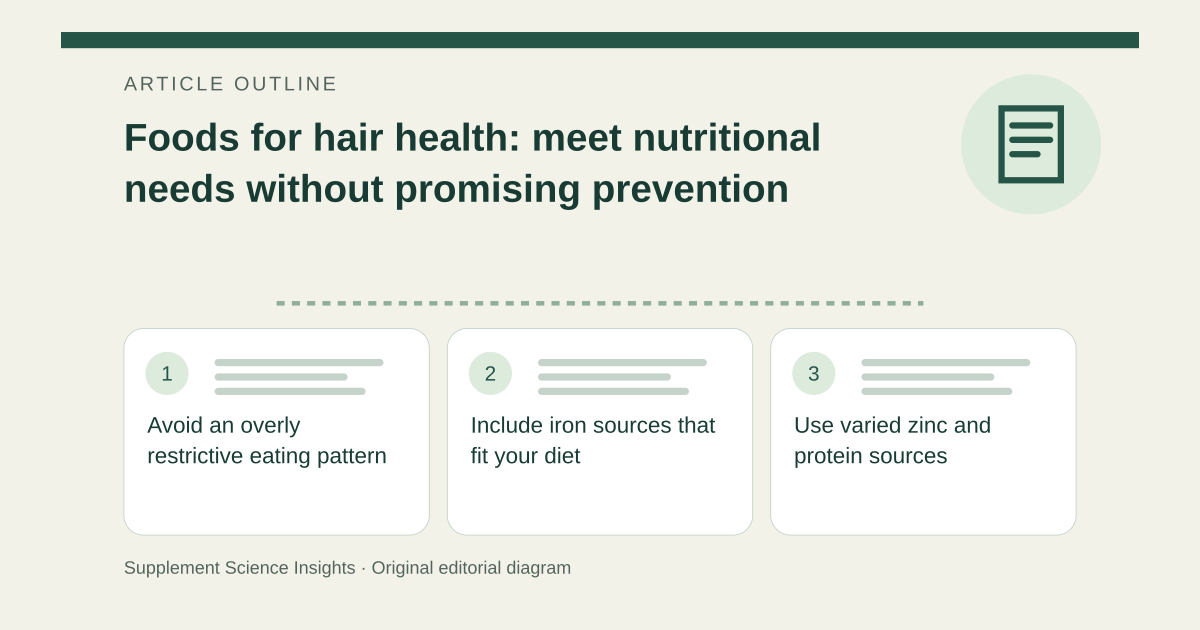
Avoid an overly restrictive eating pattern
AAD identifies inadequate calories, protein and iron among nutritional concerns in hair loss. A narrow diet chosen to avoid supposed hair-damaging foods can create gaps of its own. Review the overall pattern before looking for one superfood. [1]
Include iron sources that fit your diet
ODS identifies meat and seafood as heme-iron sources, and beans, nuts, vegetables and fortified grains as nonheme sources. Vitamin C can enhance nonheme iron absorption. For example, beans with a vitamin-C-containing vegetable is a food pairing, not a proven treatment for every case of hair loss. [2][3]
Use varied zinc and protein sources
Zinc is available from meat, seafood, eggs and dairy, as well as beans, nuts and whole grains. Plant phytate affects zinc absorption, so nutrient content and absorbed amount are not identical. Choose a varied diet compatible with allergies and preferences rather than assuming only one animal food or supplement can meet the need. [4]
Target a confirmed problem
A dermatologist may recommend correcting a demonstrated nutrient deficiency or inadequate protein intake. That does not establish extra iron or zinc as useful when intake and status are adequate. AAD also warns that excessive selenium and vitamins A or E can contribute to hair loss. [5][1]
A meal plan is not a regrowth test
Imagine adding beans, vegetables, eggs or another suitable protein food after a diet review. That can improve dietary coverage, but a change in shedding cannot by itself establish which nutrient mattered. Continue evaluation when loss persists rather than repeatedly adding high-dose hair blends. [2][4][5]
| Need | Possible food sources |
|---|---|
| Iron | Meat, seafood, beans or fortified grains |
| Zinc | Seafood, meat, dairy, beans or nuts |
| Overall adequacy | Sufficient food and a varied pattern |
Sources for this article
- Hair loss: Tips for managing
Source consulted: 2026-09-21. This is a reference resource, not a claim that we conducted the studies or tested a product. - Iron - Health Professional Fact Sheet
Source consulted: 2026-09-21. This is a reference resource, not a claim that we conducted the studies or tested a product. - Vitamin C - Health Professional Fact Sheet
Source consulted: 2026-09-21. This is a reference resource, not a claim that we conducted the studies or tested a product. - Zinc - Health Professional Fact Sheet
Source consulted: 2026-09-21. This is a reference resource, not a claim that we conducted the studies or tested a product. - Hair loss: Diagnosis and treatment
Source consulted: 2026-09-21. This is a reference resource, not a claim that we conducted the studies or tested a product.