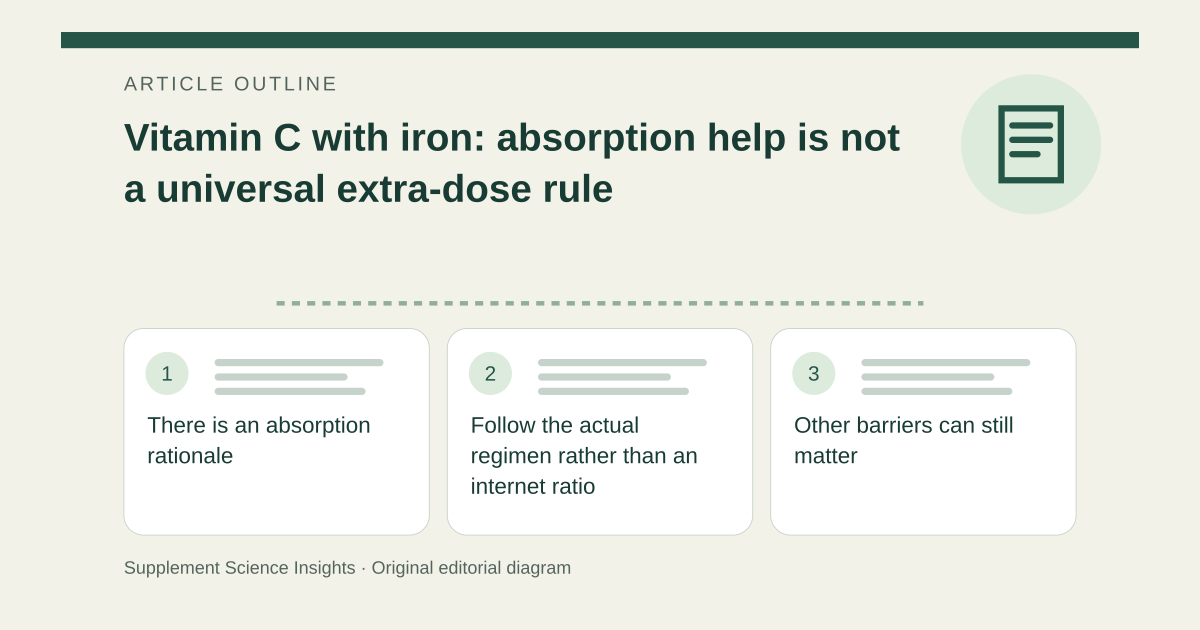
There is an absorption rationale
Vitamin C enhances absorption of nonheme iron, the form found in plant foods and many fortified foods. NIH ODS describes this dietary interaction. MedlinePlus notes that some clinicians suggest a vitamin C supplement or orange juice with an iron pill. [1][2]
These statements do not establish that everyone prescribed iron must add a high-dose vitamin C tablet. Dietary absorption, correction of anemia and long-term clinical outcomes are different questions, and a mechanism alone cannot settle them all. [1][2]
Follow the actual regimen rather than an internet ratio
The patient guidance inspected here does not supply one universal vitamin C-to-iron ratio. The NHS says orange juice may help absorption and advises following the clinician’s iron instructions. A suggestion that may be useful is not the same as a requirement for every person. [1][3]
If the prescribed plan includes vitamin C, clarify the preparation and amount. If it does not, ask whether an addition would serve a purpose before increasing the number of products. This page does not independently reappraise trials comparing iron with and without vitamin C. [1][3]
Other barriers can still matter
Adding vitamin C does not erase interactions with calcium, antacids or medicines, and it does not stop continuing blood loss. Tolerability, actual use and the cause of deficiency remain part of treatment. [1][2]
Likewise, a varied meal’s overall effect cannot be reduced to one enhancer and one inhibitor. ODS notes that dietary influences are attenuated across a typical mixed diet. Do not assume every food pairing requires a supplement correction. [1][2]
An added product is not a substitute for follow-up
Imagine someone’s blood result is not improving and they add vitamin C while still missing iron doses because of nausea. The addition does not resolve the known adherence problem. Reporting the nausea and actual use gives the clinician a more useful starting point.
| Record | Why it matters |
|---|---|
| Can vitamin C enhance nonheme absorption? | A nutritional mechanism |
| Does this person need extra vitamin C? | A regimen-specific decision |
| Why is treatment response poor? | May involve causes vitamin C cannot fix |
Iron-overload conditions change the goal
People with hereditary hemochromatosis should not try to maximize iron absorption on the basis of general anemia advice. ODS reports specialist guidance to avoid iron and vitamin C supplements in that condition. A strategy for replacing deficiency is not appropriate for every iron-status problem. [2]
No universal vitamin C amount is recommended here. The defensible answer is to follow a cause-based iron plan and use any additional product for a stated reason. [2]
Sources for this article
- MedlinePlus — Taking iron supplements
Source consulted: 2026-09-17. This is a reference resource, not a claim that we conducted the studies or tested a product. - NIH ODS — Iron: Health Professional Fact Sheet
Source consulted: 2026-09-17. This is a reference resource, not a claim that we conducted the studies or tested a product. - NHS — Iron deficiency anaemia
Source consulted: 2026-09-17. This is a reference resource, not a claim that we conducted the studies or tested a product.