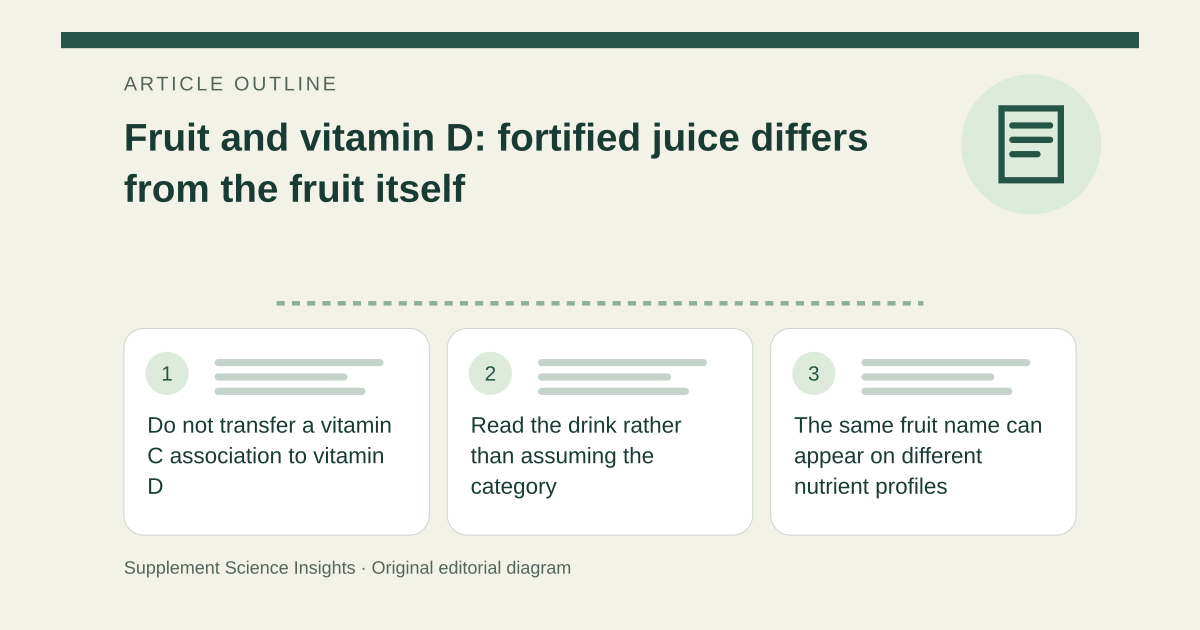
Do not transfer a vitamin C association to vitamin D
ODS lists no vitamin D for the representative apple and banana entries. It identifies fatty fish, some animal foods and certain mushrooms among natural sources, with fortified foods contributing substantially in U.S. diets. [1]
A fruit’s reputation as a vitamin-rich food does not mean it provides every vitamin. Vitamin C and vitamin D have different food distributions. [1]
Read the drink rather than assuming the category
Some brands of orange juice have added vitamin D. That does not mean all orange juice is fortified or that eating the corresponding whole fruit provides the same amount. Check the actual nutrient declaration and serving size. [1]
A fortified beverage also remains one part of a diet. Its vitamin D contribution does not make it a substitute for a clinician’s deficiency treatment plan or establish the right amount for every person. [1]
The same fruit name can appear on different nutrient profiles
Imagine two orange-juice cartons, one with added vitamin D and one without. The shared fruit name does not establish equal vitamin D content. Use the declared amount for the product and volume consumed.
| Detail | Interpretation |
|---|---|
| Whole fruit | Not a reliable vitamin D strategy |
| Fortified juice | May supply added vitamin D |
| Product label | Check amount and portion |
Sources for this article
- Vitamin D - Health Professional Fact Sheet
Source consulted: 2026-09-17. This is a reference resource, not a claim that we conducted the studies or tested a product.