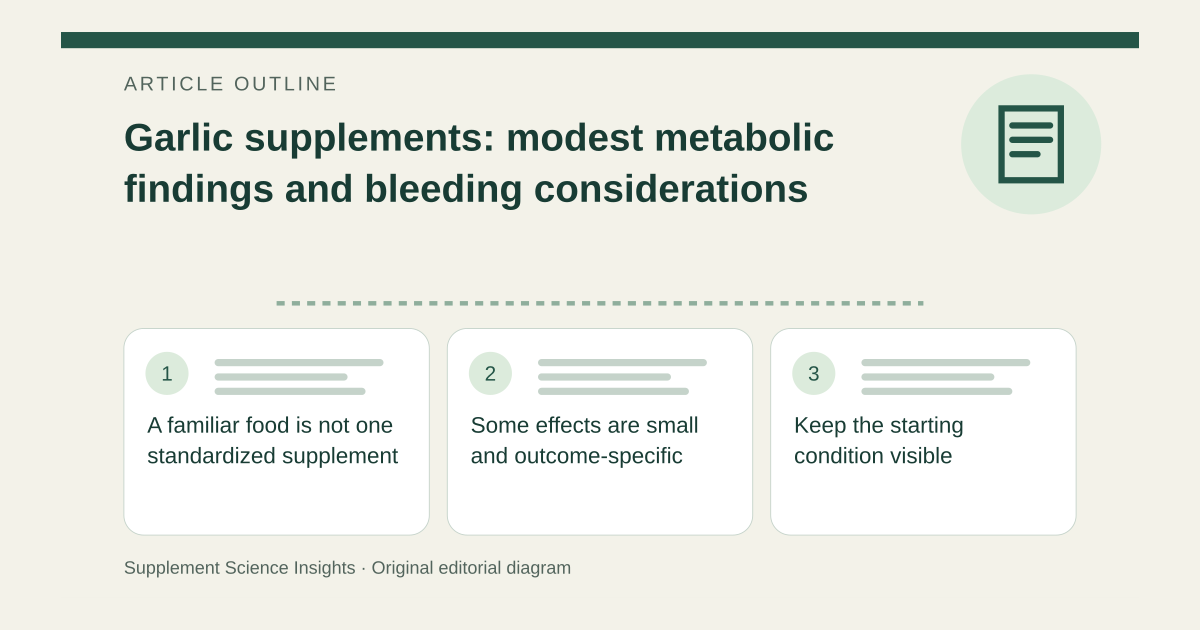
A familiar food is not one standardized supplement
Garlic, Allium sativum, appears in foods and in several supplement preparations. A study of a specified extract does not automatically describe a serving of cooked garlic, a powder capsule or a different processed product. [1]
For a supplement claim, identify the actual preparation, serving and other ingredients. Culinary familiarity may explain why a product feels recognizable, but it does not establish that concentrated use has the same exposure or safety profile as food. [1]
Some effects are small and outcome-specific
NCCIH reports that garlic supplements may modestly reduce total and LDL cholesterol in people with elevated cholesterol. Limited evidence also suggests small blood-pressure changes in people with hypertension and small glucose changes in people with diabetes. [1]
These findings should not be expanded into proof of fewer heart attacks or a safe replacement for prescribed treatment. Claims about preventing colds have very limited supporting research. Consuming garlic has not appeared to reduce stomach-cancer risk, and evidence for colorectal-cancer risk remains uncertain. [1]
Keep the starting condition visible
A result among people with high cholesterol may not describe people whose cholesterol is already in a usual range. The absolute starting value and background treatment influence how a change should be interpreted.
Check whether the trial isolated garlic or added it to another intervention. Also look for a comparison group and the duration of follow-up. A small laboratory improvement can be real without settling whether the supplement is worthwhile for a particular person or whether it improves outcomes that matter over years.
Bleeding and skin injury deserve clear attention
Garlic supplements may increase bleeding risk, especially alongside anticoagulants or aspirin and around surgery. Tell the treating team about supplements when reviewing medicines or planning a procedure. Oral adverse effects can include odor, nausea, abdominal discomfort and gas; allergic reactions are possible. [1]
Fresh raw garlic applied to skin can cause marked irritation or chemical burns. Food use does not justify a homemade topical treatment. Supplemental amounts during pregnancy or breastfeeding require caution because food-level experience cannot establish safety at larger exposures. [1]
Describe a laboratory change accurately
Imagine a fictional cholesterol study reports LDL changing from 160 to 152 mg/dL in one group. That is an 8 mg/dL within-group decline, or 5 percent of the starting value. Without the comparison group's change, the treatment effect remains unknown.
Even a credible LDL result should not be rewritten as a demonstrated reduction in heart attacks unless those events were actually measured.
| Fictional measure | Calculation or limit |
|---|---|
| LDL: 160 to 152 mg/dL | 8 mg/dL; 5% within-group decrease |
| Comparator absent | Treatment effect unresolved |
| Heart attacks not measured | Do not claim event prevention |
Use the evidence without enlarging it
Garlic can be part of food choices while supplement claims are assessed separately. This reference neither substitutes a supplement for cardiovascular care nor ranks preparations by marketing terms. The preparation, measured outcome and bleeding context remain central.
Sources for this article
- NCCIH — Garlic supplements: Usefulness and Safety
Source consulted: 2026-09-17. This is a reference resource, not a claim that we conducted the studies or tested a product.