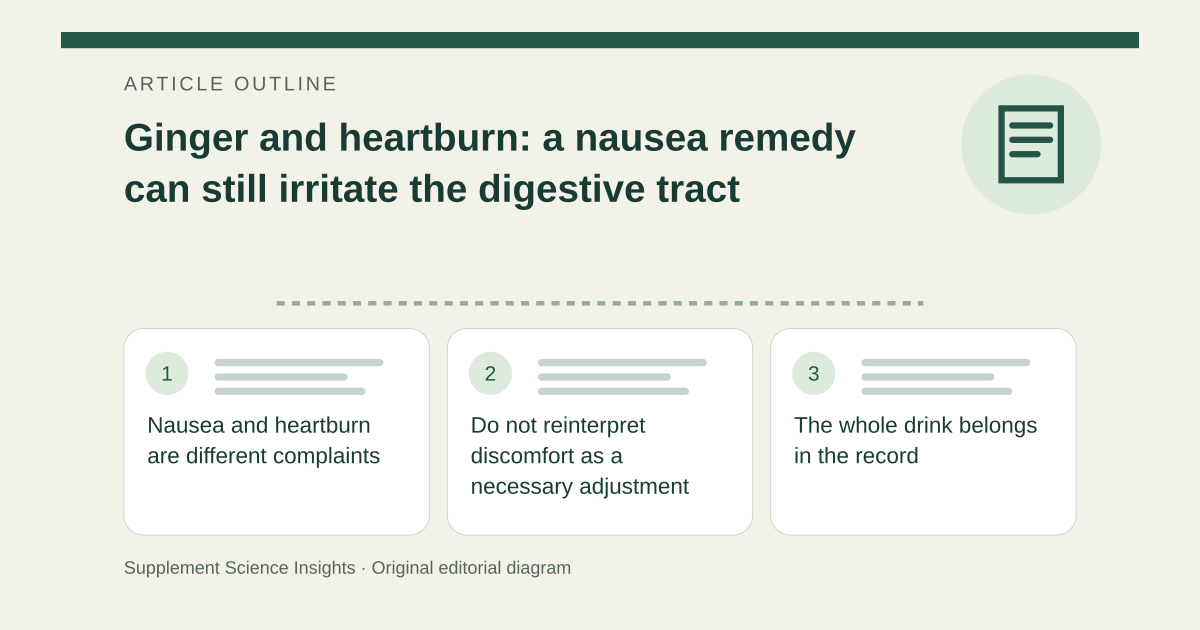
Nausea and heartburn are different complaints
NCCIH lists heartburn, abdominal discomfort, diarrhea and mouth or throat irritation among possible effects of oral ginger. The fact that ginger may help one type of nausea does not rule out causing another digestive symptom. [1]
A new burning sensation after starting a product is useful information for a clinical review, but timing alone cannot identify the cause. The full preparation, amount used and other simultaneous changes matter. [1]
Do not reinterpret discomfort as a necessary adjustment
The source does not support treating heartburn as proof of absorption, detoxification or an effective ginger dose. Increasing the amount despite discomfort is not a way to validate a product. [1]
A drink, powder and concentrated extract may provide different exposures. Persistent or worsening symptoms deserve assessment of their cause rather than repeated changes between ginger formats. This article does not diagnose reflux or select an acid-suppression treatment. [1]
The whole drink belongs in the record
Imagine someone begins a multi-ingredient ginger drink and develops heartburn. Recording only the word ginger leaves out the rest of the product and the timing. A complete record helps investigate the association without assuming which ingredient caused it.
| Question | What matters |
|---|---|
| Product and amount | Record complete exposure |
| Timing of heartburn | Useful association |
| Cause established | Requires more than sequence |
Sources for this article
- NCCIH: Ginger
Source consulted: 2026-09-17. This is a reference resource, not a claim that we conducted the studies or tested a product.