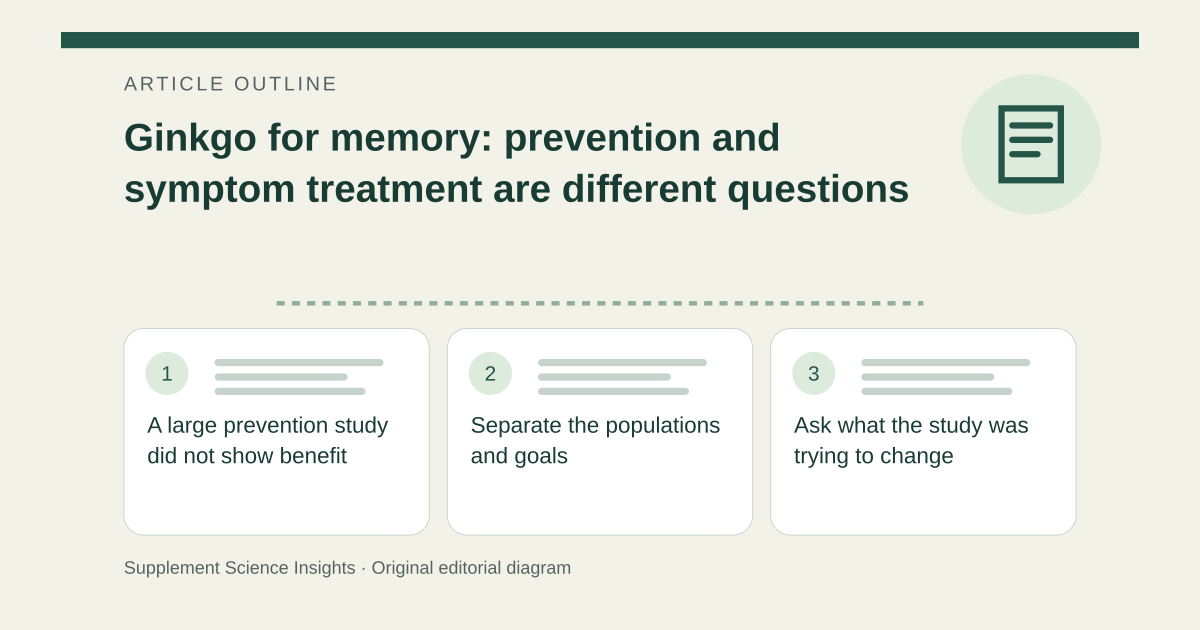
A large prevention study did not show benefit
NCCIH describes the Ginkgo Evaluation of Memory study, in which more than 3,000 adults aged 75 or older with normal cognition or mild cognitive impairment received ginkgo or placebo for a median of six years. Dementia incidence did not differ between groups. [1]
This government summary supports a conclusion about prevention in that setting. It does not establish that a commercial brain-health blend improves memory. [1]
Separate the populations and goals
NCCIH describes possible modest benefit for dementia symptoms but inconsistent evidence. Whether ginkgo improves cognitive performance in healthy people remains uncertain, with much of that research of low quality. [1]
A claim about symptom scores in people already diagnosed with dementia cannot overturn a negative prevention result. The population and outcome must remain attached to the finding. [1]
Ask what the study was trying to change
Imagine an advertisement cites a symptom study to claim that ginkgo prevents dementia. Those are different outcomes. The citation must address new diagnoses before it can support the prevention claim.
| Detail | Interpretation |
|---|---|
| Prevention | New dementia diagnoses |
| Symptom treatment | Changes after diagnosis |
| Healthy cognition | Another population |
Sources for this article
- Ginkgo: Usefulness and Safety | NCCIH
Source consulted: 2026-09-17. This is a reference resource, not a claim that we conducted the studies or tested a product.