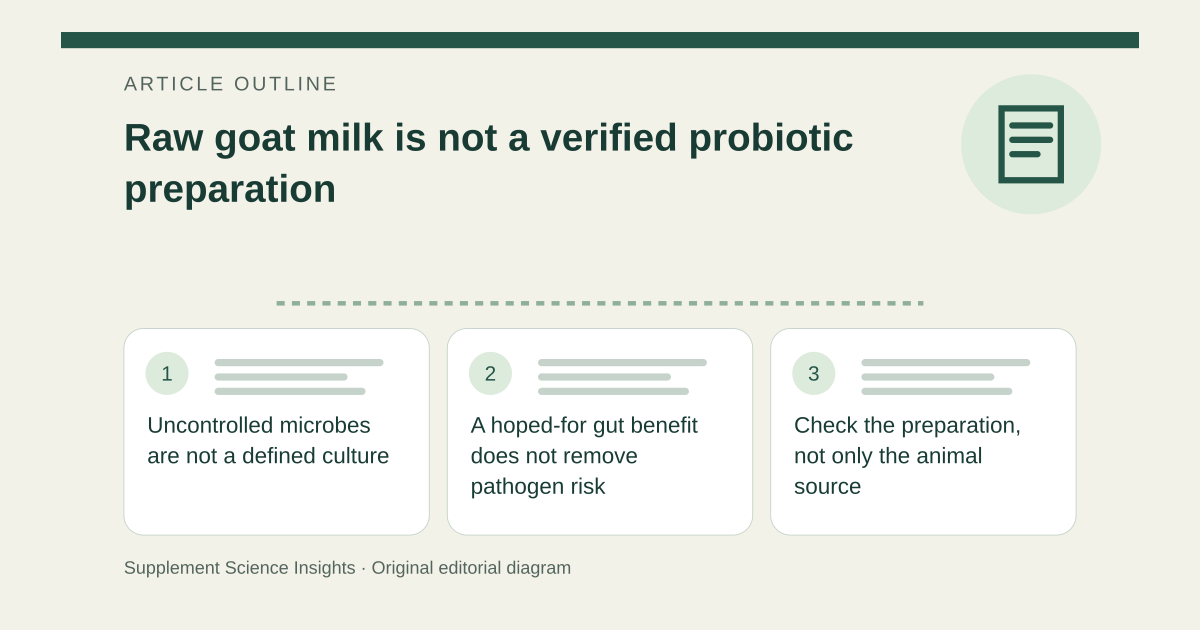
Uncontrolled microbes are not a defined culture
FDA distinguishes raw-milk microorganisms from cultures deliberately added during yogurt production. The species of animal providing the milk does not turn an uncontrolled microbial mixture into a tested probiotic preparation. [1][2]
A cultured product also needs to be identified by its processing and organism information. Raw, fermented and probiotic are not interchangeable labels. [1][2]
A hoped-for gut benefit does not remove pathogen risk
FDA warns about pathogens in raw milk and supports pasteurization for safety. A general claim about friendly bacteria does not establish that a raw product is free of harmful organisms. [1][2]
Use food-safety information for the actual product rather than assuming that more microbes means more benefit. A probiotic claim requires more than the absence of pasteurization. [1][2]
Check the preparation, not only the animal source
Imagine one goat-milk product is pasteurized and then deliberately cultured, while another is raw. The shared milk source does not establish the same microbiological properties.
| Detail | Interpretation |
|---|---|
| Raw | Unpasteurized |
| Cultured | Deliberate microbial process |
| Probiotic | Specific benefit evidence needed |
Sources for this article
- Raw Milk Misconceptions and the Danger of Raw Milk Consumption | FDA
Source consulted: 2026-09-18. This is a reference resource, not a claim that we conducted the studies or tested a product. - Probiotics - Health Professional Fact Sheet
Source consulted: 2026-09-18. This is a reference resource, not a claim that we conducted the studies or tested a product.