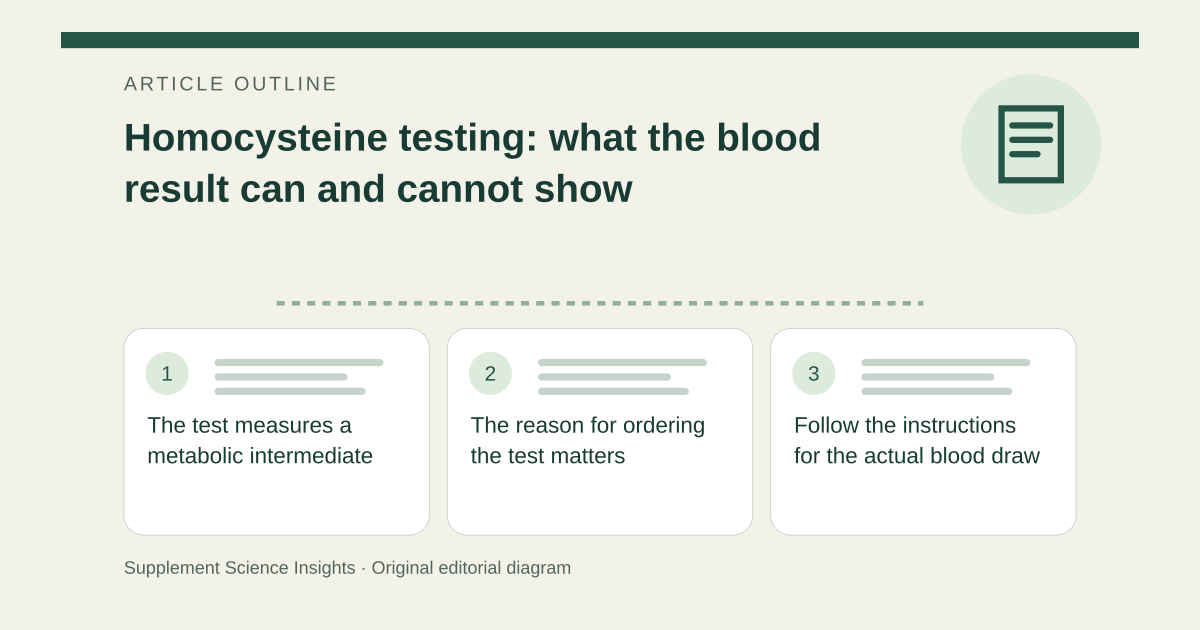
The test measures a metabolic intermediate
Homocysteine is an amino acid involved in metabolism. Folate, vitamin B12 and vitamin B6 participate in pathways that process it. Low status of relevant vitamins can therefore contribute to a raised homocysteine result. [1]
That relationship does not turn the test into a direct measurement of all three vitamins. A clinician may need other tests, symptoms and history to determine whether a deficiency is present and which nutrient is involved. [1]
The reason for ordering the test matters
MedlinePlus describes use in selected vitamin-deficiency evaluations and in diagnosing or monitoring homocystinuria, a rare inherited condition. It also explains that routine testing to screen everyone for heart-disease risk is not recommended. [1]
Elevated values can occur with kidney disease, hypothyroidism and other influences. Age, smoking and other circumstances can affect interpretation. A result outside a reference interval therefore does not identify one cause or automatically establish that supplements are needed. [1]
Follow the instructions for the actual blood draw
The laboratory or clinician may request fasting, often for 8–12 hours, depending on the test instructions. Tell them about medicines and supplements, especially B vitamins, because these may matter to the result. Do not independently stop prescribed treatment to prepare. [1]
Ask how the result will change the next step. Testing is most useful when linked to a clinical question rather than used as a general score of supplement adequacy. [1]
The same result can lead to different follow-up
Imagine two people have an elevated value: one has evidence of B12 deficiency and the other has kidney disease. The shared laboratory finding does not erase the different causes. Their evaluation and management may differ.
| Observation | What it means |
|---|---|
| Measured quantity | Blood homocysteine |
| Possible contributors | Vitamins and non-vitamin causes |
| Next step | Interpret with the clinical question |
Sources for this article
- MedlinePlus: Homocysteine test
Source consulted: 2026-09-17. This is a reference resource, not a claim that we conducted the studies or tested a product.