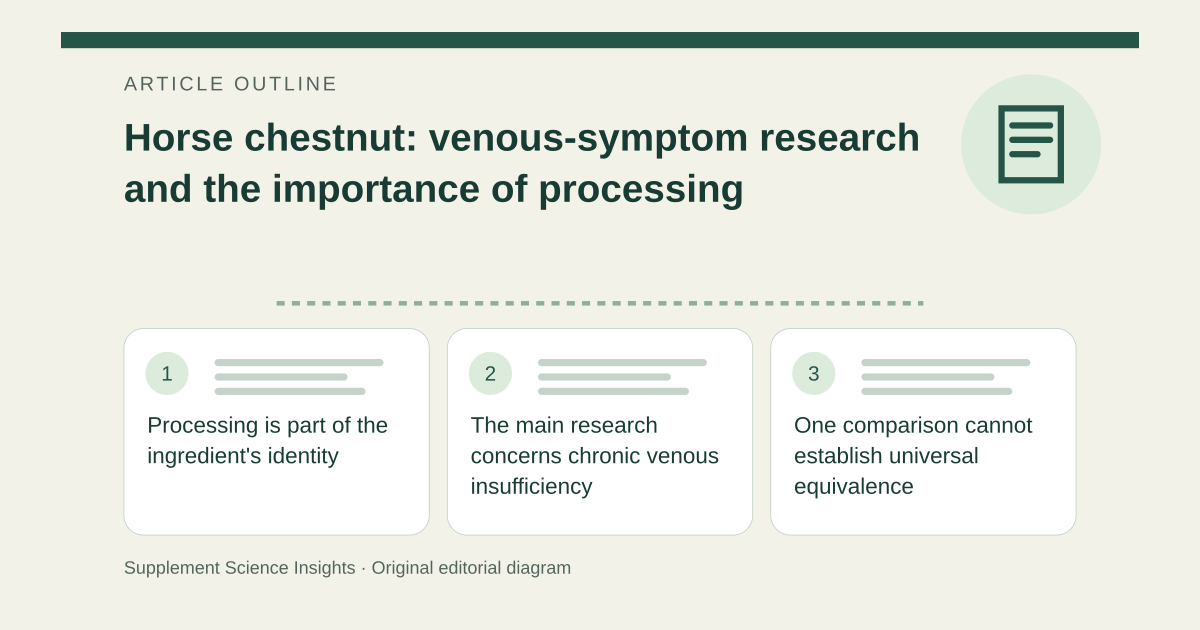
Processing is part of the ingredient's identity
Horse chestnut, Aesculus hippocastanum, is not an edible chestnut. Research has generally concerned standardized seed extracts processed to remove a toxic component. Raw seeds, bark, flowers and leaves are not substitutes for those preparations. [1]
This distinction is central to the evidence. A botanical name on a package does not establish that the relevant processing occurred. The plant part, extraction and specification should be clear before a research finding is matched to a product. [1]
The main research concerns chronic venous insufficiency
Chronic venous insufficiency involves impaired return of blood through leg veins. NCCIH summarizes research suggesting that horse chestnut seed extract may improve associated symptoms. However, the studies leave a need for larger, more rigorous trials. [1]
A symptom benefit should not be enlarged into a claim that the underlying condition is cured. Limited research on infertility associated with varicocele and on irritable bowel syndrome does not support firm conclusions for those uses. Findings from one vascular setting cannot automatically transfer to another. [1]
One comparison cannot establish universal equivalence
A finding from a particular trial comparing an extract with compression treatment applies to that trial's population, preparation, duration and outcome. It does not establish that every horse chestnut product replaces compression or other care.
Swelling, discomfort, circumference and function may change differently. A useful summary reports which measurement improved and how much, while keeping background treatment visible. A change in one leg measurement is not evidence that all causes of leg swelling respond to the same supplement.
Raw material is unsafe to swallow
NCCIH explicitly describes unprocessed plant parts as unsafe for oral use. Standardized extracts with the toxic component removed have a different short-term safety record. This page does not provide a home-processing method or imply that a homemade preparation can be made equivalent. [1]
Studied extracts can still cause dizziness, digestive upset, headache or itching. Evidence beyond short study periods is limited, and pregnancy or breastfeeding information is inadequate. Assessment of the actual product and the underlying symptoms remains important. [1]
Preserve the preparation mismatch
Imagine a fictional trial uses a specified processed seed extract while a seller offers whole seeds with a traditional-use story. The trial cannot establish the safety or effectiveness of swallowing those seeds.
Even matching the advertised milligram amount would not resolve the missing processing and composition information. The correct comparison records a mismatch, not a conversion or a recommendation.
| Fictional material | Evidence relationship |
|---|---|
| Standardized processed extract | Specified intervention |
| Raw seeds | Unsafe oral substitute |
| Same mass | Does not establish equivalence |
A narrow evidence claim is more useful
Horse chestnut research concerns particular extracts and particular venous symptoms. This overview does not recommend replacing an established treatment or self-treating unexplained swelling. A botanical's processing history can be as important as its name when judging applicability.
Sources for this article
- NCCIH — Horse chestnut: Usefulness and Safety
Source consulted: 2026-09-17. This is a reference resource, not a claim that we conducted the studies or tested a product.