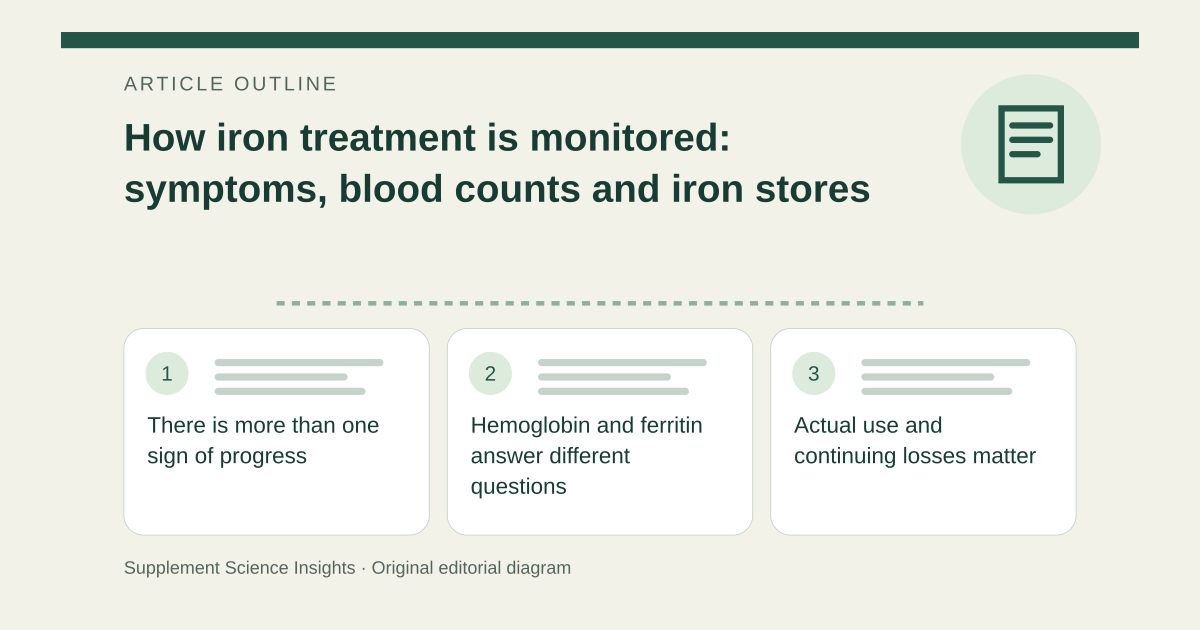
There is more than one sign of progress
Iron treatment may be followed through symptoms, blood counts and markers of iron stores. These do not necessarily change at the same pace. A person may feel less tired before the whole treatment goal has been reached. [1][2]
Conversely, symptoms can persist for reasons other than iron deficiency. A good follow-up plan asks what is changing and whether the change matches the original diagnosis rather than relying on one impression of energy. [1][2]
Hemoglobin and ferritin answer different questions
Hemoglobin helps describe anemia; ferritin provides information about iron stores, with interpretation affected by inflammation. Normalizing a blood count does not automatically establish that stores have been fully replenished. [1][3][2]
This is one reason treatment may continue after blood-count improvement. MedlinePlus and NHS guidance describe continued therapy and repeat checks, but the exact duration varies with the cause, response and clinician’s plan. Their general timelines are not deadlines that every patient must meet. [1][3][2]
Actual use and continuing losses matter
At follow-up, report doses actually taken, adverse effects, food or medicine conflicts and ongoing bleeding. A prescribed regimen recorded on paper is not the same as the amount successfully used. The information can explain an apparently slow response. [3][2]
The cause also needs attention. Correcting intake while heavy menstrual or gastrointestinal blood loss continues may leave an unresolved problem. Testing should inform both replacement and the wider investigation. [3][2]
A better result is not an automatic stopping signal
Imagine a repeat blood count improves and the person feels better. They still need to ask whether the prescribed course should continue and whether iron stores or the underlying cause require further review. The improvement supports progress but does not independently determine an end date.
| Record | Why it matters |
|---|---|
| Less fatigue | Useful but not a measure of iron stores |
| Improved hemoglobin | Evidence about anemia |
| Ongoing bleeding or missed doses | May change the next step |
Review a poor response rather than doubling the dose
If symptoms or results are not improving as expected, contact the treating team. Higher amounts can worsen gastrointestinal adverse effects and may not address absorption problems, continuing losses or another diagnosis. [3][1][2]
This page does not give a universal time-to-benefit guarantee or a laboratory target. It explains what evidence of response can mean and why follow-up belongs to the treatment plan. [3][1][2]
Sources for this article
- NIH ODS — Iron: Health Professional Fact Sheet
Source consulted: 2026-09-17. This is a reference resource, not a claim that we conducted the studies or tested a product. - NHS — Iron deficiency anaemia
Source consulted: 2026-09-17. This is a reference resource, not a claim that we conducted the studies or tested a product. - MedlinePlus — Taking iron supplements
Source consulted: 2026-09-17. This is a reference resource, not a claim that we conducted the studies or tested a product.