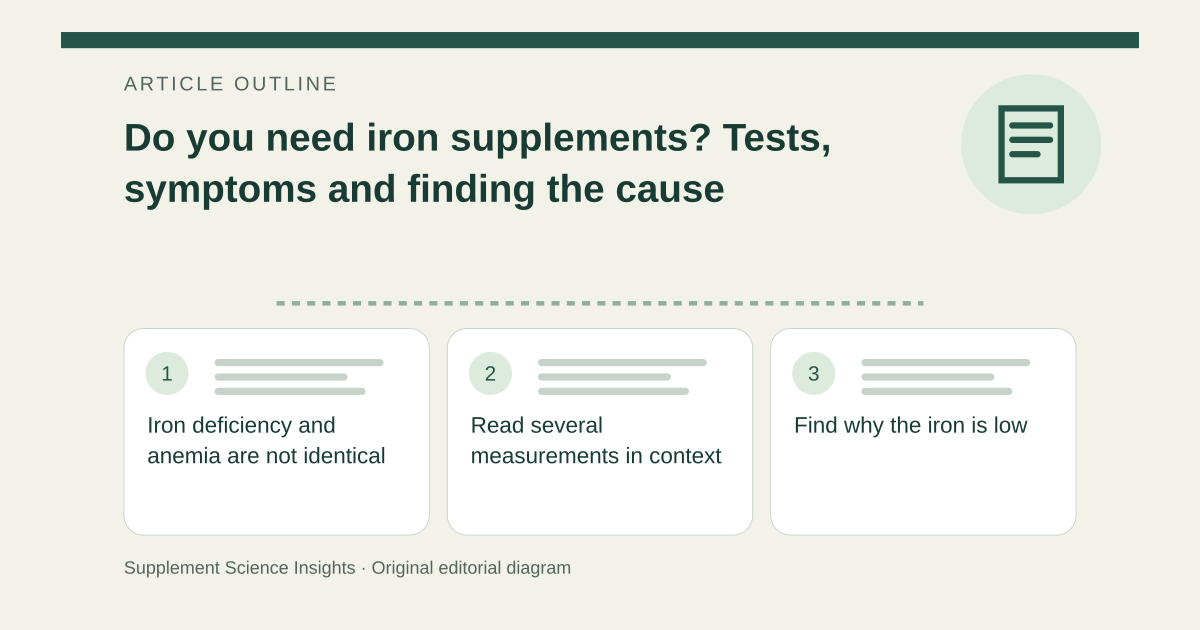
Iron deficiency and anemia are not identical
Iron stores can become depleted before hemoglobin falls enough to produce anemia. Conversely, anemia can have causes other than iron deficiency. NIH ODS describes a progression from depleted stores to impaired red-cell production and then iron-deficiency anemia. [1][2]
This is why “I feel tired” and “my hemoglobin is low” are starting points for assessment rather than complete reasons to choose an iron product. The proposed treatment should match the finding. [1][2]
Read several measurements in context
A full blood count helps assess red cells, including hemoglobin and cell characteristics. Ferritin provides information about iron stores and can identify depletion before anemia develops. But inflammation can raise ferritin, complicating its interpretation. [1]
ODS notes that commonly used markers are not individually sensitive and specific enough to describe the whole range of iron status. Clinicians may combine measurements and consider diet, blood loss and medical history. An isolated result copied from a report should not become an online self-diagnosis. [1]
Find why the iron is low
The NHS identifies heavy menstrual bleeding, pregnancy and gastrointestinal bleeding among important causes of iron-deficiency anemia. If the cause is unclear, further testing may be needed. Iron replacement and cause-finding are complementary parts of care. [2][1]
A diet that appears adequate does not exclude losses or absorption problems. Likewise, a dietary gap should not be assumed to explain every abnormal result without considering the rest of the history. [2][1]
Two people with fatigue can need different investigations
Imagine two people report persistent fatigue. One has documented depleted iron stores and heavy periods; the other has no iron results and a different medical history. The shared symptom does not establish the same diagnosis or justify the same supplement regimen.
Useful records include previous tests with units and dates, symptoms, bleeding history, medicines and any iron already used.
| Record | Why it matters |
|---|---|
| Fatigue | A symptom with multiple possible causes |
| Ferritin and blood-count results | Different pieces of the assessment |
| Ongoing blood loss | A cause that replacement alone may not solve |
More iron is not a harmless diagnostic trial
Excess supplemental iron can cause gastrointestinal harm and, at very high exposures, serious poisoning. People with iron-overload disorders have a different risk profile. Taking iron until someone feels better is not a reliable way to establish deficiency. [1]
Ask what finding treatment is intended to correct and how response will be checked. This page explains the assessment process without choosing a laboratory cutoff or dose for an individual. [1]
Sources for this article
- NIH ODS — Iron: Health Professional Fact Sheet
Source consulted: 2026-09-17. This is a reference resource, not a claim that we conducted the studies or tested a product. - NHS — Iron deficiency anaemia
Source consulted: 2026-09-17. This is a reference resource, not a claim that we conducted the studies or tested a product.