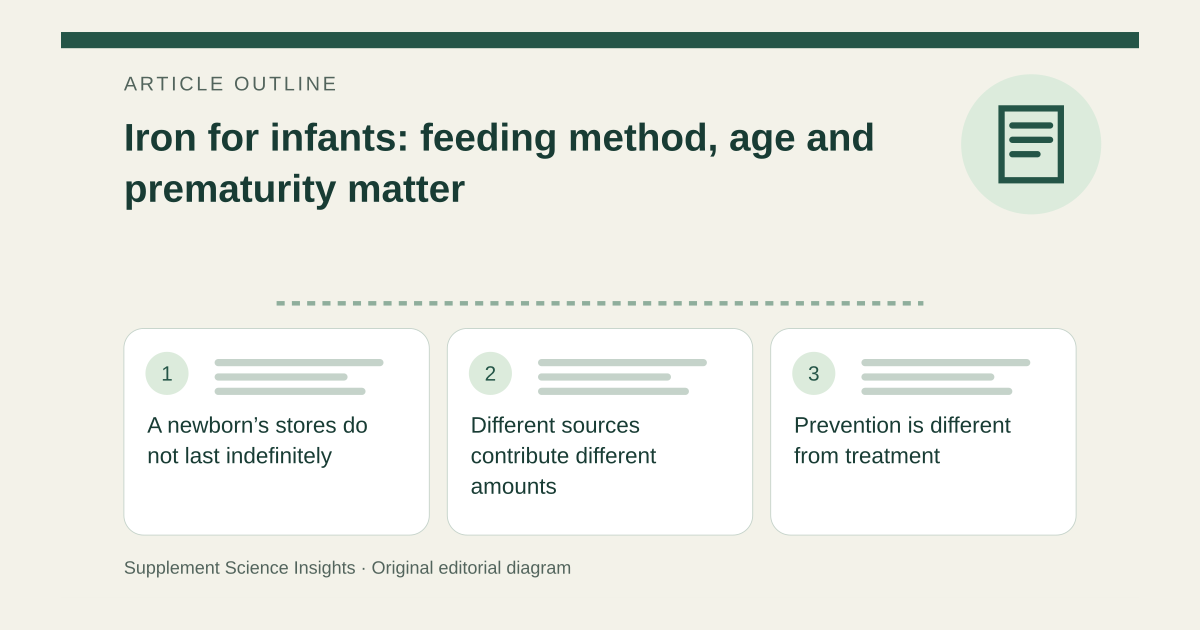
A newborn’s stores do not last indefinitely
Full-term infants generally begin life with iron stores that support the first several months. NIH ODS notes that rapid growth then increases the need for external iron. Preterm or low-birthweight infants may have lower stores and require a different plan much earlier. [1]
The question is therefore not simply whether a baby is breastfed or formula fed. Age, birth history, actual milk intake and the introduction of iron-containing foods all matter. [1]
Different sources contribute different amounts
Breast milk contains iron, but its quantity alone becomes insufficient for needs as infancy progresses. Iron-fortified formula provides another source, and iron-containing complementary foods become important with development. A food or formula label cannot be interpreted without knowing how much is consumed. [1]
ODS summarizes pediatric recommendations that differ in details and population scope. Some address healthy full-term breastfed infants; others address preterm infants or settings with a high prevalence of anemia. Do not merge them into one universal drops schedule. [1]
Prevention is different from treatment
A preventive recommendation for an at-risk infant and treatment of diagnosed iron-deficiency anemia are separate decisions. The dose, preparation and follow-up must fit the infant and the purpose. Adult tablets and adult intake limits are not a basis for calculating infant drops. [1]
Ask the pediatric team how feeding changes should affect the plan and when assessment is appropriate. Record prematurity and prior treatment rather than assuming current body size tells the entire story. [1]
Mixed feeding needs an actual intake history
Imagine a baby receives both breast milk and formula, but the family record says only “formula fed.” That description leaves out how much fortified formula is consumed and what other foods have been introduced. A more accurate record helps the pediatric team decide whether an additional iron source is needed.
| Record | Why it matters |
|---|---|
| Age and birth history | Stores and needs differ |
| Actual fortified formula intake | Category alone does not show the iron supplied |
| Drops already used | Record the exact concentration and prescribed amount |
Use the exact pediatric preparation and secure it
Iron overdose can be dangerous or fatal to a young child. Keep all iron products out of reach, including adult supplements in the home. If a child swallows an iron tablet or an excessive amount, contact poison control or emergency medical services promptly rather than waiting for symptoms. [1][2]
This article explains the decision factors and does not provide a weight-based dose or recommend a brand of infant drops. [1][2]
Sources for this article
- NIH ODS — Iron: Health Professional Fact Sheet
Source consulted: 2026-09-17. This is a reference resource, not a claim that we conducted the studies or tested a product. - MedlinePlus — Taking iron supplements
Source consulted: 2026-09-17. This is a reference resource, not a claim that we conducted the studies or tested a product.