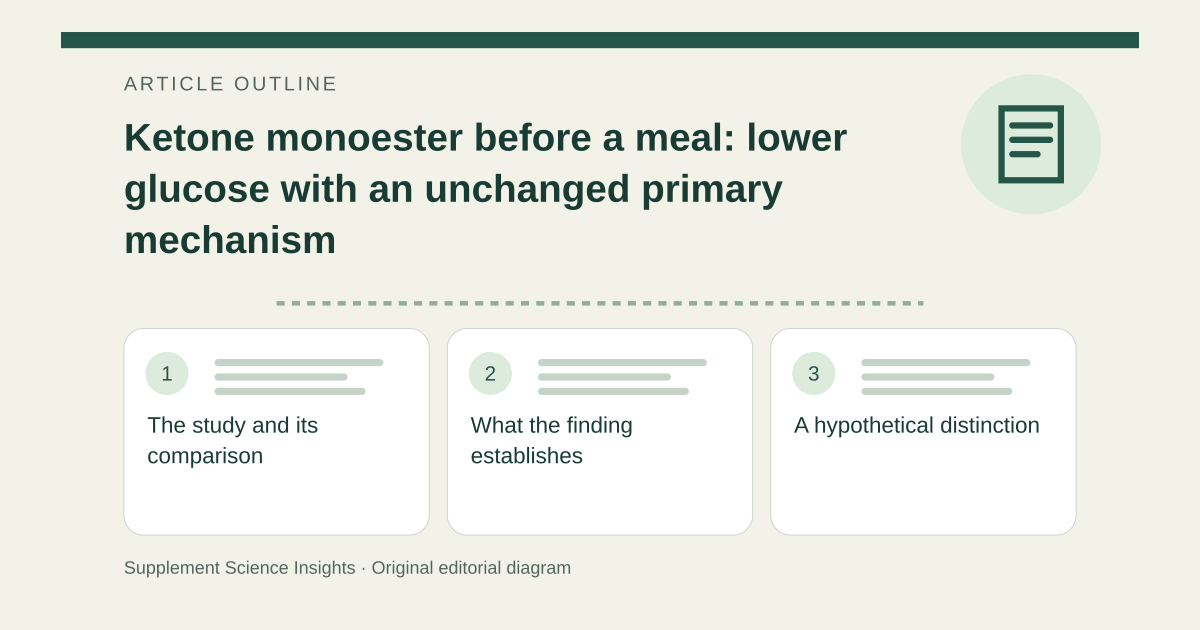
The study and its comparison
Ten adults with type 2 diabetes completed a randomized blinded crossover experiment. A ketone monoester or taste-matched placebo preceded a mixed meal, while tracers measured glucose movement. [1]
The ketone drink lowered post-meal glucose concentrations, but the primary outcome, endogenous glucose production, was unchanged. The findings instead suggested delayed appearance of meal-derived glucose. Insulin concentrations did not differ. [1]
What the finding establishes
One meal in ten people cannot establish durable glucose control, complication prevention or safety of repeated use. A monoester is not interchangeable with magnesium BHB or other ketone salts. Public research grants supported the project; complete conflicts were not established from the abstract. The regimen is an experimental comparison, not a replacement for diabetes treatment. [1]
A hypothetical distinction
Imagine blood glucose falls but liver glucose production does not. A different pathway may explain the finding.
| Detail | Interpretation |
|---|---|
| Measured outcome | Keep the endpoint specific |
| Study preparation | Not every retail product |
| Remaining uncertainty | Not resolved by a mechanism |
Sources for this article
- A ketone monoester drink reduces postprandial blood glucose concentrations in adults with type 2 diabetes: a randomised controlled trial.
Source consulted: 2026-09-19. This is a reference resource, not a claim that we conducted the studies or tested a product.