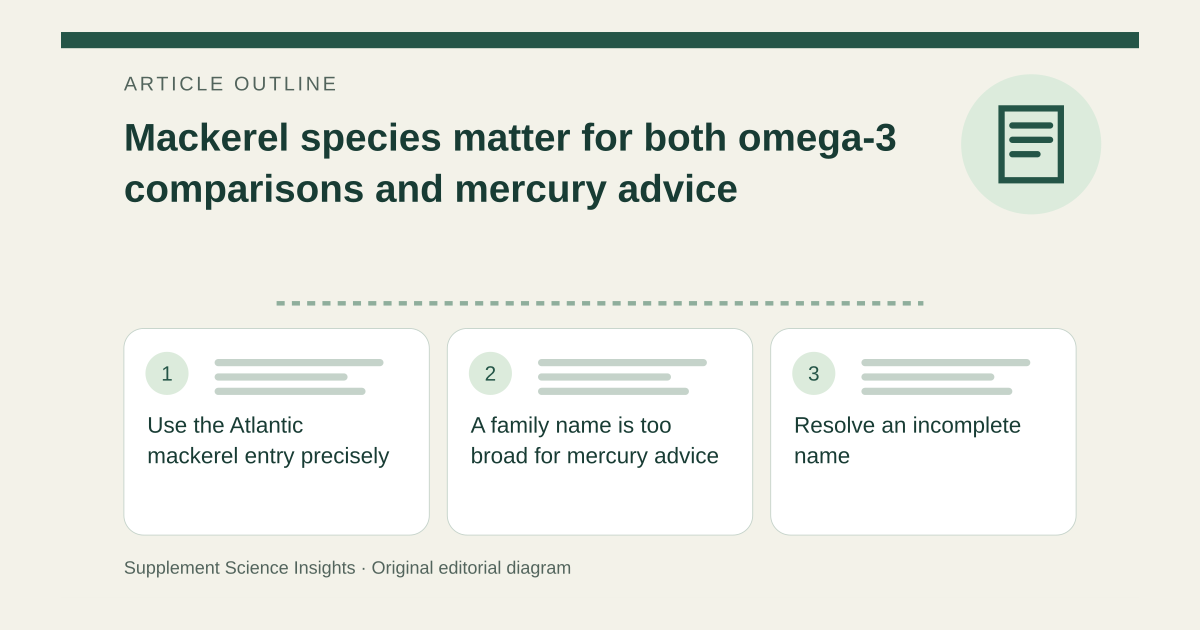
Use the Atlantic mackerel entry precisely
NIH ODS lists 0.59 grams DHA and 0.43 grams EPA per three ounces of cooked Atlantic mackerel. Together that is 1.02 grams, or 1,020 milligrams, of EPA plus DHA. [1]
The entry is not a composition guarantee for every species sold as mackerel. It also describes cooked fish, so compare portions and preparation before comparing values. [1]
A family name is too broad for mercury advice
FDA/EPA places Atlantic mackerel and Pacific chub mackerel in Best Choices, Spanish mackerel in Good Choices, and king mackerel in Choices to Avoid. The advice is especially relevant to people who may become pregnant, are pregnant or breastfeeding, and children. [2]
An omega-3-rich food can still require species-specific mercury consideration. Neither the amount of fish oil nor the broad word mackerel cancels the need to identify the fish. [2]
Resolve an incomplete name
Imagine a menu says only mackerel. Before applying the Atlantic mackerel nutrition estimate or its mercury category, identify which species the menu means.
| Detail | Interpretation |
|---|---|
| Atlantic mackerel, three cooked ounces | 1,020 mg EPA plus DHA |
| Spanish mackerel | Different mercury category |
| King mackerel | Choices to Avoid |
Sources for this article
- Omega-3 Fatty Acids - Health Professional Fact Sheet
Source consulted: 2026-09-19. This is a reference resource, not a claim that we conducted the studies or tested a product. - Advice about Eating Fish | FDA
Source consulted: 2026-09-19. This is a reference resource, not a claim that we conducted the studies or tested a product.