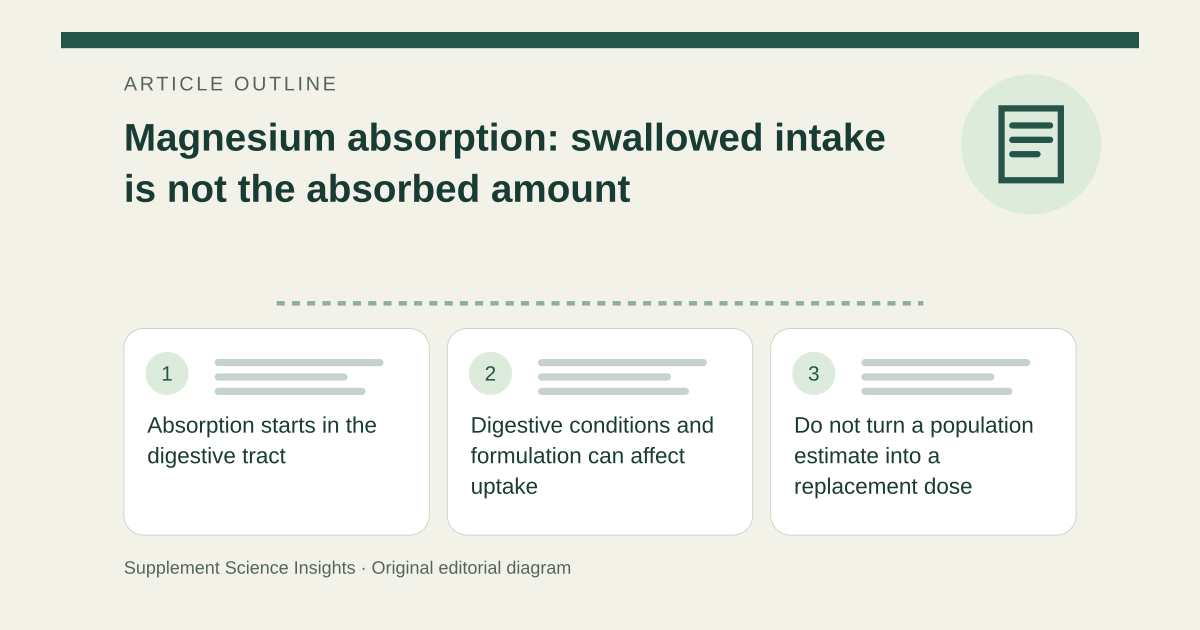
Absorption starts in the digestive tract
ODS describes magnesium absorption from the gut and estimates that roughly 30–40 percent of magnesium from food and beverages is generally absorbed. That broad dietary estimate is not a measurement of a particular person or supplement. [1]
After absorption, kidney handling helps regulate magnesium balance. Poor status can reflect inadequate intake, impaired absorption or increased losses; those mechanisms are not interchangeable. [1]
Digestive conditions and formulation can affect uptake
Gastrointestinal diseases associated with diarrhea or malabsorption can increase the risk of inadequacy. A persistent problem requires investigation rather than simply choosing a product advertised as highly absorbable. [1]
Small studies summarized by ODS find some more soluble magnesium forms better absorbed than oxide or sulfate. Such comparisons do not establish a guaranteed personal percentage, nor do they show that an arbitrary absorption multiplier should be used to set the daily intake. [1]
Do not turn a population estimate into a replacement dose
Imagine someone records 100 mg of dietary magnesium and multiplies it by 0.35. The resulting 35 mg is an illustration of a percentage, not a measured amount absorbed. Dividing the recommended intake by 0.35 to choose supplements would misuse the reference, which already concerns oral intake.
| Observation | Meaning |
|---|---|
| 100 mg eaten | An intake record |
| 35 percent assumed | A hypothetical fraction |
| 35 mg calculated | Not a personal absorption test |
Sources for this article
- NIH ODS: Magnesium
Source consulted: 2026-09-17. This is a reference resource, not a claim that we conducted the studies or tested a product.