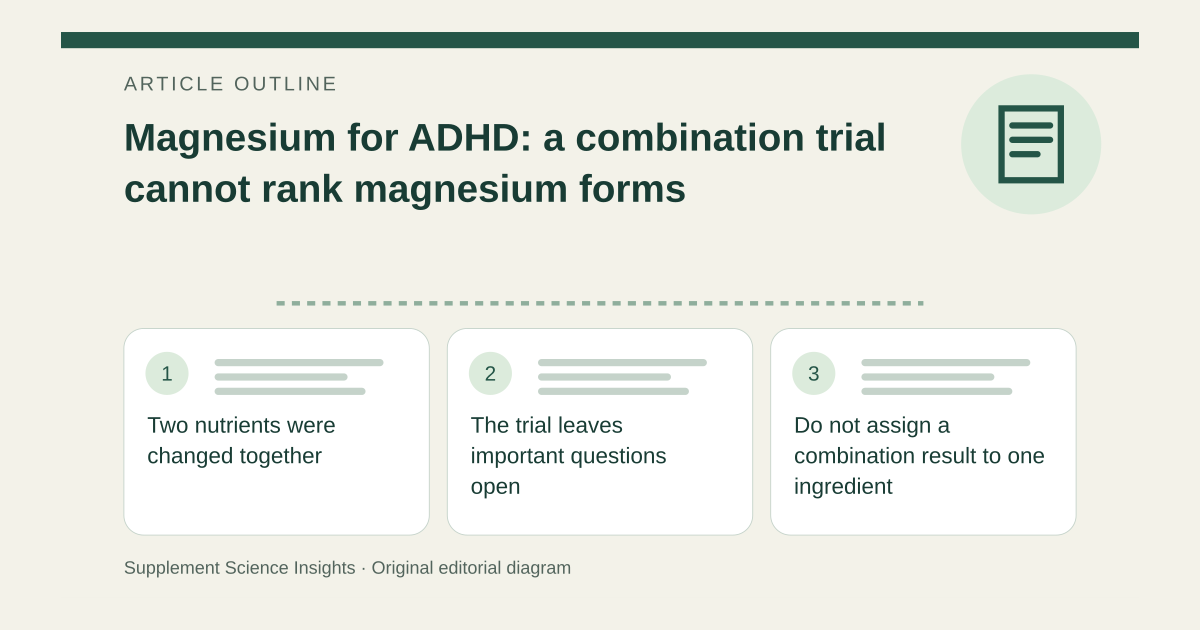
Two nutrients were changed together
The randomized, double-blind trial assigned 66 children with ADHD to magnesium plus vitamin D or placebo for eight weeks. Mental-health outcomes were assessed with the Strengths and Difficulties Questionnaire. [1]
Several questionnaire domains and total difficulties improved relative to placebo. Those findings concern the combined intervention, the studied children and the measured scores; they are not a comparison of magnesium salts. [1]
The trial leaves important questions open
Without magnesium-only and vitamin-D-only groups, the separate contribution of each nutrient cannot be determined. The small sample and short follow-up also limit conclusions about durable benefit, broader populations and safety over longer periods. [1]
The authors reported no conflicts of interest. Funding was not fully assessed from the abstract used here. This study does not establish a self-directed pediatric dose or justify replacing a child’s established ADHD care with a supplement. [1]
Do not assign a combination result to one ingredient
Imagine a two-nutrient group improves more than placebo. The study cannot show which nutrient produced the difference when neither was tested alone.
| Detail | Interpretation |
|---|---|
| 66 children | Small study |
| Two nutrients | Separate effects unresolved |
| Eight weeks | Limited duration |
Sources for this article
- The effect of vitamin D and magnesium supplementation on the mental health status of attention-deficit hyperactive children: a randomized controlled trial - PubMed
Source consulted: 2026-09-19. This is a reference resource, not a claim that we conducted the studies or tested a product.