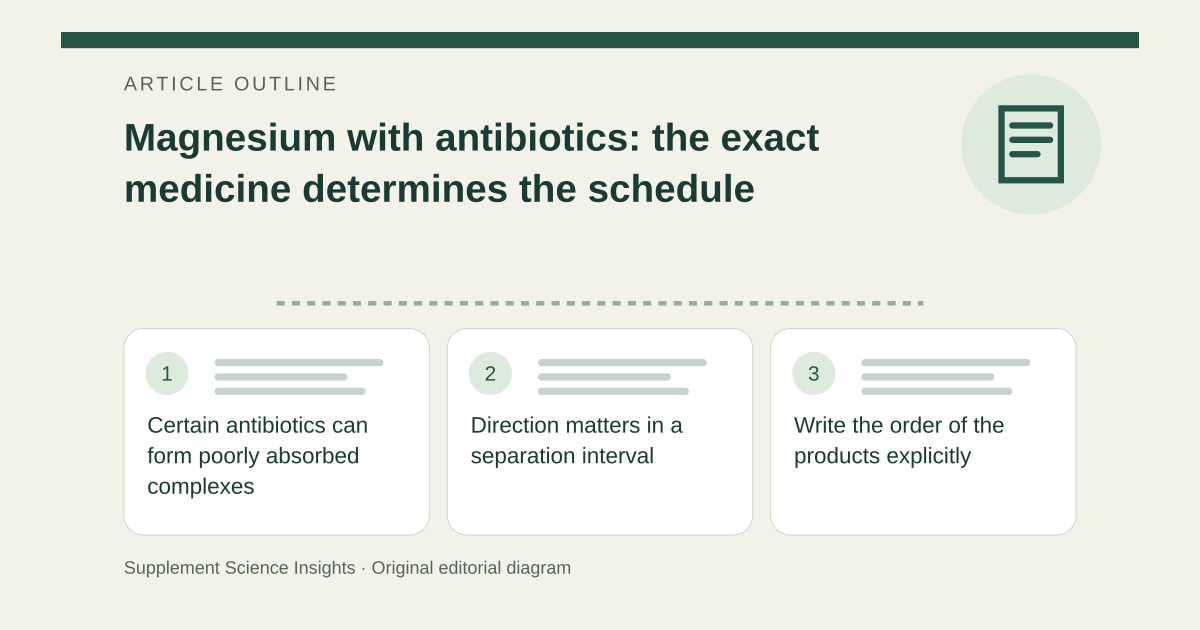
Certain antibiotics can form poorly absorbed complexes
ODS identifies tetracyclines, including doxycycline, and quinolones, including ciprofloxacin and levofloxacin, as antibiotics that can form insoluble complexes with magnesium. The concern is reduced antibiotic absorption, not proof that magnesium is incompatible with every antibiotic. [1]
A medicine list should include antacids and laxatives as well as products marketed as supplements. Magnesium remains relevant when its package is labeled for stomach symptoms rather than nutrition. [1]
Direction matters in a separation interval
The ODS summary advises taking these antibiotics at least two hours before, or four to six hours after, a magnesium supplement. The prescriber or pharmacist should reconcile that general guidance with the actual drug’s instructions and the full regimen. [1]
Do not turn those two different intervals into a universal two-hour gap. Nor should antibiotic doses be omitted or moved arbitrarily to accommodate an optional supplement. A medication-specific schedule is the useful output of the review. [1]
Write the order of the products explicitly
Imagine a note says only “separate by two hours.” It does not state which product comes first and may not match the antibiotic’s instructions. A useful record lists the drug, magnesium product, planned times and pharmacist-confirmed interval.
| Observation | Meaning |
|---|---|
| Antibiotic name missing | Drug-specific directions unknown |
| Two-hour gap only | Order not specified |
| Exact products and times | A schedule the pharmacist can review |
Sources for this article
- NIH ODS: Magnesium
Source consulted: 2026-09-17. This is a reference resource, not a claim that we conducted the studies or tested a product.