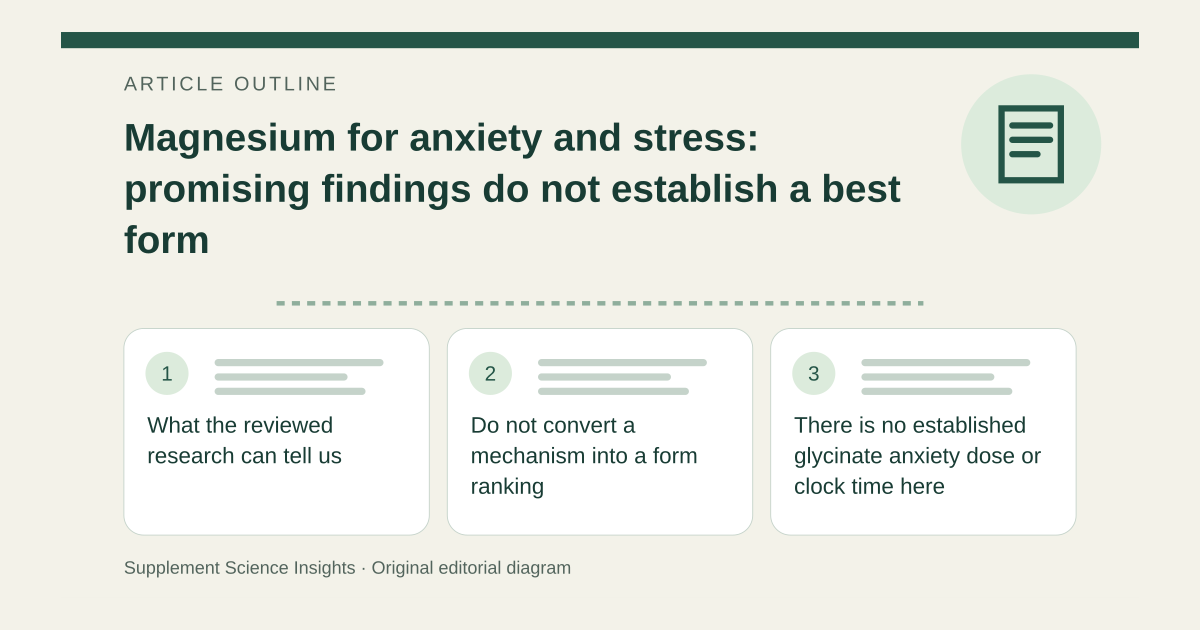
What the reviewed research can tell us
A 2024 systematic review found encouraging signals in some studies of self-reported anxiety and sleep. Small samples, different doses and durations, varying populations and additional active ingredients limited firm conclusions. The review could not identify an optimal magnesium form. This is a summary of that review, not a fresh appraisal of every trial or proof of benefit for all anxiety disorders. [1]
Do not convert a mechanism into a form ranking
Magnesium participates in normal nerve and muscle function. That role does not show that glycinate, citrate, oxide or another salt is the best anxiety treatment. Better intestinal absorption and a lower anxiety score are different endpoints; a product needs relevant outcome evidence to connect them. [2][1]
There is no established glycinate anxiety dose or clock time here
The inspected evidence does not establish a universal glycinate amount or whether morning or night is better for anxiety. Read elemental magnesium and count other supplements and medicines. The adult 350 mg nonfood upper limit is a safety boundary, not an anxiety-treatment target; supervised treatment may differ. [2][1]
Include treatments with a clearer clinical role
NHS guidance describes talking therapies such as cognitive behavioural therapy and medicines such as SSRIs for generalized anxiety disorder. A supplement should not delay assessment when worry affects daily life or replace prescribed care on the basis of a calming label. [3]
Interpret a change with its surrounding circumstances
Imagine stress improves after starting magnesium while sleep, workload and therapy also change. That experience cannot isolate which factor helped. Record the regimen and symptoms, review kidney function and interactions when relevant, and avoid repeated dose escalation when anxiety continues. [2][3]
| Claim | Unanswered question |
|---|---|
| Best absorbed form | Does it improve anxiety outcomes? |
| Recommended bedtime amount | Which relevant study supports that schedule? |
| I felt calmer | What else changed and did function improve? |
Sources for this article
- Examining the Effects of Supplemental Magnesium on Self-Reported Anxiety and Sleep Quality: A Systematic Review - PMC
Source consulted: 2026-09-21. This is a reference resource, not a claim that we conducted the studies or tested a product. - Magnesium - Health Professional Fact Sheet
Source consulted: 2026-09-21. This is a reference resource, not a claim that we conducted the studies or tested a product. - Generalised anxiety disorder (GAD) - NHS
Source consulted: 2026-09-21. This is a reference resource, not a claim that we conducted the studies or tested a product.