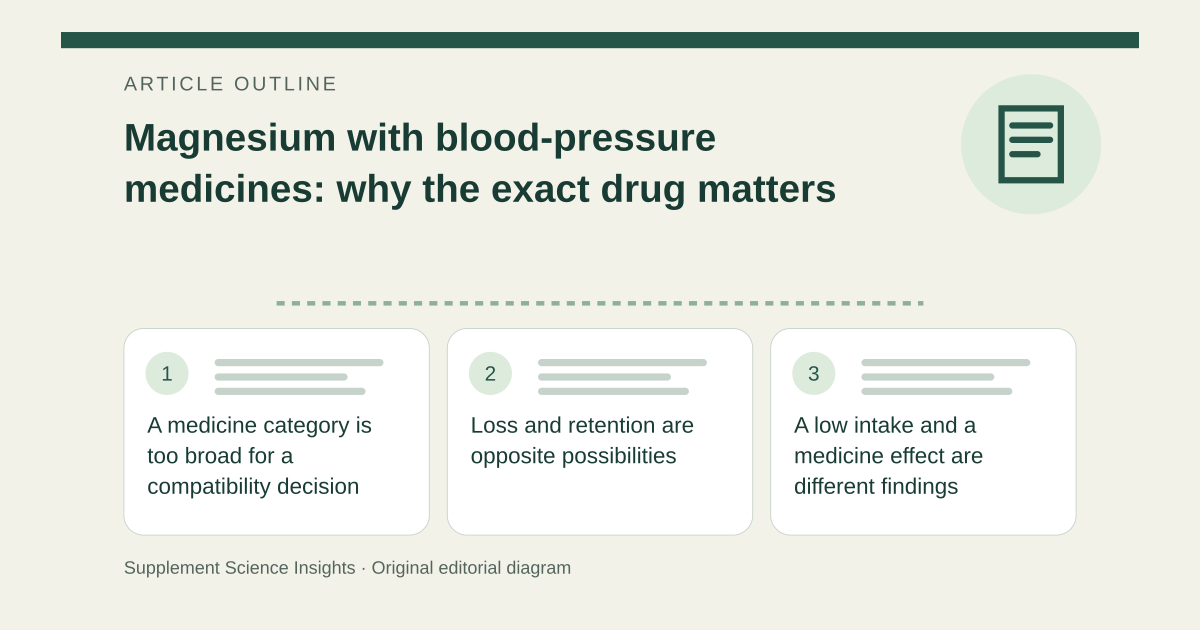
A medicine category is too broad for a compatibility decision
Blood-pressure medicines do not all affect magnesium in the same way. NIH ODS describes increased urinary magnesium loss with some diuretics and reduced excretion with potassium-sparing diuretics. The exact drug and the person’s kidney function matter. [1]
This is different from asking whether magnesium supplements can lower blood pressure. A potential nutritional or trial effect does not settle the safety of combining a particular supplement with a prescribed regimen. [1]
Loss and retention are opposite possibilities
Loop and thiazide diuretics can increase magnesium losses during chronic treatment. Potassium-sparing medicines such as amiloride and spironolactone reduce magnesium excretion. These are reasons for individualized assessment, not automatic instructions to add magnesium with one drug or avoid all food magnesium with another. [1]
Keep the drug name rather than writing only “water pill.” Also record combination tablets, because a product name may conceal more than one active ingredient. The treating team can relate the medicine list to symptoms and laboratory findings. [1]
A low intake and a medicine effect are different findings
A dietary shortfall, a low serum result and a drug that can alter magnesium each provide different information. None independently establishes the ideal supplement amount. Serum measurements also have limitations as a reflection of total body stores. [1]
Kidney impairment can increase toxicity risk from added magnesium. A supplement choice that seemed acceptable before a change in kidney function or treatment deserves review afterward. [1]
Do not borrow a friend’s diuretic advice
Imagine one person was advised to review magnesium after losses associated with a diuretic. A friend taking a different, potassium-sparing medicine copies the supplement. The shared label “blood-pressure pill” does not establish the same magnesium balance or need.
A more useful question for the pharmacist includes the exact prescription, dose, kidney history and proposed magnesium product.
| Observation | Interpretation |
|---|---|
| Loop or thiazide diuretic | May increase magnesium loss |
| Potassium-sparing diuretic | Can reduce magnesium excretion |
| A generic “water pill” description | Not enough for compatibility advice |
Keep the blood-pressure plan intact
Do not stop or alter prescribed blood-pressure treatment to accommodate a supplement. ODS characterizes magnesium’s average blood-pressure effect as modest, and high supplemental exposure can cause diarrhea and, in toxicity, marked hypotension or rhythm problems. [1]
This page does not provide a universal spacing interval or declare a combination safe. It explains why an exact-drug review is needed and why a supplement should not be treated as a replacement for prescribed therapy. [1]
Sources for this article
- NIH ODS — Magnesium: Health Professional Fact Sheet
Source consulted: 2026-09-17. This is a reference resource, not a claim that we conducted the studies or tested a product.