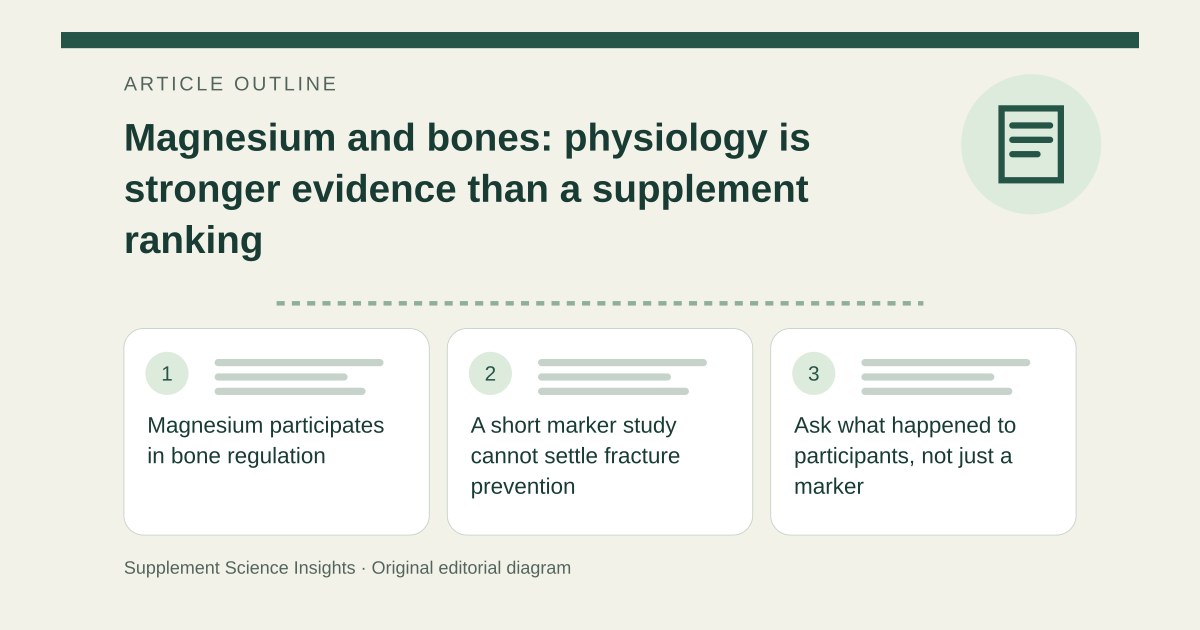
Magnesium participates in bone regulation
Magnesium contributes to bone formation and influences parathyroid hormone and active vitamin D, both involved in bone regulation. ODS also describes associations between magnesium intake and bone mineral density. [1]
These observations support adequate nutrition. They do not establish that a higher supplemental amount continually strengthens bone or that one magnesium compound is the best osteoporosis treatment. [1]
A short marker study cannot settle fracture prevention
The ODS synthesis includes a small, short study of postmenopausal women that assessed bone turnover after supplementation. A change in turnover is not the same as demonstrating fewer fractures over years. [1]
ODS concludes that more research is needed on magnesium in osteoporosis prevention and management. Comparing absorption between salts adds another indirect measurement; it does not fill the fracture-evidence gap. A nutritional addition should fit the existing bone-health plan rather than replace treatment. [1]
Ask what happened to participants, not just a marker
Imagine a four-week study reports a change in a bone-turnover marker. A claim that its participants had fewer hip fractures would require fracture data that the marker result does not provide. Record the actual endpoint and duration before accepting that stronger conclusion.
| Observation | Meaning |
|---|---|
| Turnover marker | Short-term biological measure |
| Bone mineral density | Structural measurement |
| Fracture incidence | Clinical event requiring its own evidence |
Sources for this article
- NIH ODS: Magnesium
Source consulted: 2026-09-17. This is a reference resource, not a claim that we conducted the studies or tested a product.