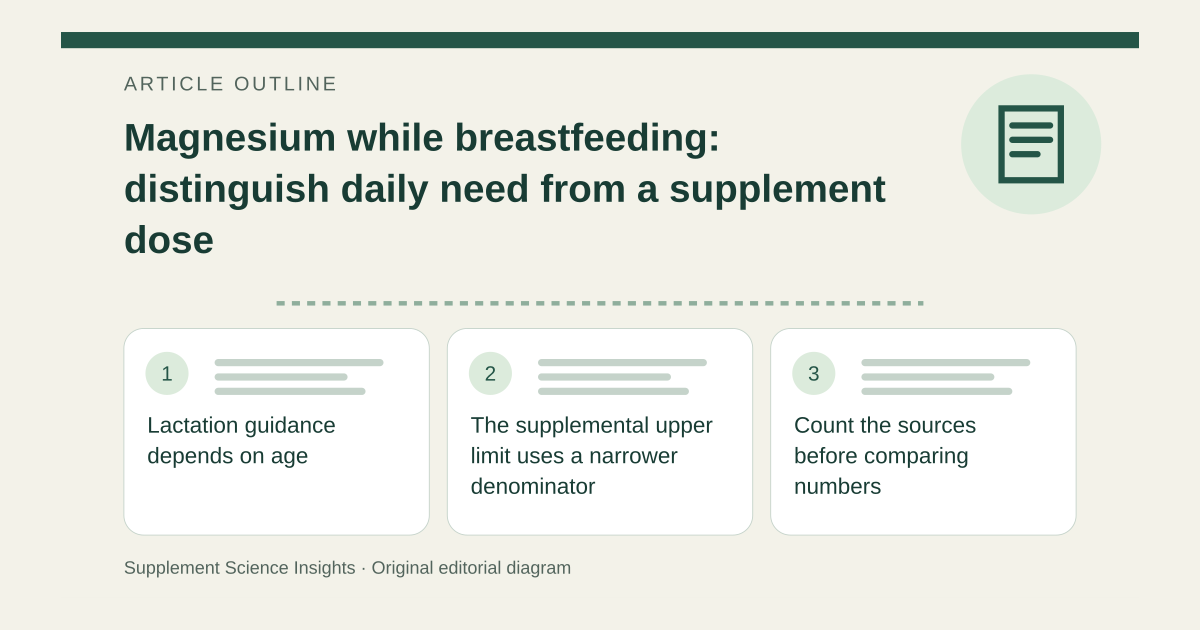
Lactation guidance depends on age
NIH ODS lists 310–320 mg daily for breastfeeding adults and 360 mg for breastfeeding teens. Those amounts describe intake from all sources. Legumes, nuts, seeds, whole grains and leafy vegetables can contribute substantially without requiring a separate magnesium product. [1]
The adult range reflects age-related differences, not an instruction to choose whichever supplement strength is larger. Assess the dietary contribution and any prenatal or multivitamin product before deciding that there is a gap. [1]
The supplemental upper limit uses a narrower denominator
The adult upper limit is 350 mg daily from supplements and magnesium-containing medications unless a health professional directs otherwise. Magnesium naturally present in foods does not count toward that limit. Laxatives and antacids can contribute magnesium even if they are not marketed as nutrient supplements. [1]
Higher supplemental intakes can cause diarrhea, nausea and cramping; extremely high exposures can cause serious toxicity. Magnesium can also interfere with absorption of some medicines. A product-specific review is more useful than assuming every salt or blend is interchangeable. [1]
Count the sources before comparing numbers
Imagine a breastfeeding adult obtains 220 mg from foods and 100 mg from a supplement. The total is 320 mg, while only 100 mg counts toward the supplemental limit. Neither number proves a milk-supply benefit, and the example is not a personal dose recommendation.
| Situation | Interpretation |
|---|---|
| 320 mg in the example | Food plus supplement |
| 100 mg in the example | Supplemental contribution |
| Milk supply | Not established by intake guidance |
Sources for this article
- NIH ODS: Magnesium — Consumer
Source consulted: 2026-09-17. This is a reference resource, not a claim that we conducted the studies or tested a product.