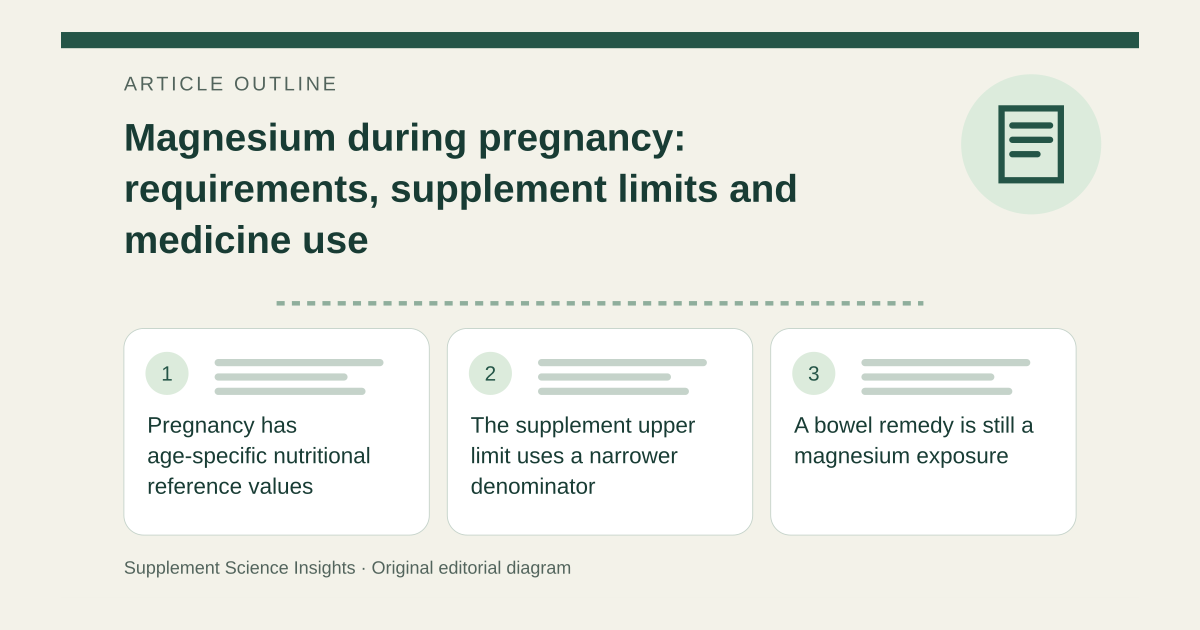
Pregnancy has age-specific nutritional reference values
The U.S. magnesium RDA in pregnancy is 400 mg daily at ages 14–18, 350 mg at ages 19–30 and 360 mg at ages 31–50. NIH ODS presents these as total-intake requirements, including food. They are not instructions to add that full amount as a separate supplement. [1]
A person’s diet, prenatal formulation and other products can all contribute. The relevant starting point is the actual total and the reason for supplementation, rather than the assumption that every pregnancy needs a standalone magnesium product. [1]
The supplement upper limit uses a narrower denominator
For pregnant people aged 14 and older, the U.S. upper limit is 350 mg daily from supplements and medicines. Naturally occurring magnesium in food is excluded. This explains why a total-intake RDA can be near or above the supplemental upper limit without contradiction. [1]
The upper limit is not a recommended supplement amount and does not settle a medically supervised treatment decision. A prescribed regimen should be reviewed with the obstetric team rather than adjusted using a general nutrition table. [1]
A bowel remedy is still a magnesium exposure
Some antacids and laxatives supply magnesium. MedlinePlus advises discussing pregnancy or breastfeeding before using magnesium hydroxide and following the exact product directions. An over-the-counter medicine should not disappear from the list simply because it is taken for constipation rather than nutrition. [1][2]
The preparation, amount and reason for use matter. A claim about a nutrient’s normal role does not show that a particular supplement treats pregnancy symptoms or replaces monitored medical care. [1][2]
Separate food and supplemental totals
Suppose a hypothetical intake record contains 250 mg from foods, 50 mg from a prenatal and 100 mg from a separate supplement. Total recorded intake is 400 mg, while the supplemental subtotal is 150 mg. Neither subtotal proves that the added product is necessary or that the food record is complete.
| Observation | Interpretation |
|---|---|
| Food: 250 mg | Included in total intake |
| Prenatal 50 mg plus supplement 100 mg | 150 mg supplemental subtotal |
| All recorded sources | 400 mg total; not a recommended plan |
Review suitability, not just arithmetic
Magnesium can cause diarrhea and interacts with some medicines; impaired kidney function increases toxicity risk. Bring the entire prenatal and medicine list to the clinician or pharmacist. Do not assume a “pregnancy friendly” label resolves those questions. [1]
This page explains reference values and exposure accounting. It does not prescribe magnesium for pregnancy complications or select a retail form for all pregnant people. [1]
Sources for this article
- NIH ODS — Magnesium: Health Professional Fact Sheet
Source consulted: 2026-09-17. This is a reference resource, not a claim that we conducted the studies or tested a product. - MedlinePlus — Magnesium Hydroxide
Source consulted: 2026-09-17. This is a reference resource, not a claim that we conducted the studies or tested a product.