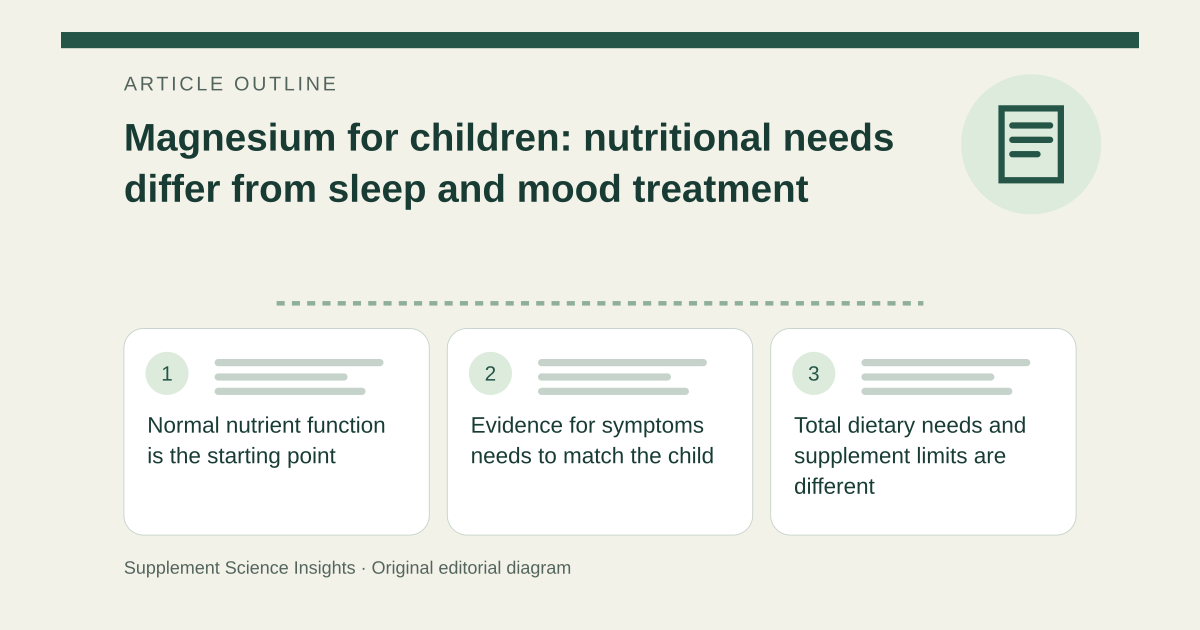
Normal nutrient function is the starting point
Magnesium supports muscle and nerve function, energy metabolism and bone health. Adequate intake is important, but a restless night or a mood change does not diagnose deficiency. Review diet and clinical concerns before selecting a product marketed for calm. [1]
Evidence for symptoms needs to match the child
NCCIH warns that many complementary approaches have limited pediatric safety and effectiveness evidence. Its magnesium sleep summary also describes limited high-quality research. These sources do not establish a universal pediatric magnesium regimen for insomnia, anxiety or behaviour problems. [2][3]
Total dietary needs and supplement limits are different
NIH lists nonfood upper limits of 65 mg daily for ages 1–3, 110 mg for ages 4–8 and 350 mg for ages 9–18. These concern magnesium from supplements and medicines, not naturally occurring food magnesium. They are not treatment targets, and clinician-directed treatment may differ. [1]
Count every source and consider kidney function
A multivitamin, sleep product and constipation medicine may each contribute magnesium. Excess can cause diarrhea and more serious toxicity, especially with impaired kidney function. Do not convert an adult serving to a child dose by guesswork. [4][1][2]
Sleep care can begin with the routine and the cause
NHS recommends a consistent, calming routine and limiting screens before bed for young children. Persistent sleep problems or concerns about mood and development warrant pediatric advice. Imagine a child begins sleeping better after both a new routine and a supplement: the improvement cannot be attributed to magnesium alone. [5][2]
| Detail | Why it matters |
|---|---|
| Age | Changes nutritional guidance |
| All supplements and medicines | Prevents missed duplicate exposure |
| Sleep or mood concern | Needs a specific assessment |
| Adult evidence | Does not establish a child regimen |
Sources for this article
- Magnesium - Consumer
Source consulted: 2026-09-21. This is a reference resource, not a claim that we conducted the studies or tested a product. - Children and the Use of Complementary Health Approaches | NCCIH
Source consulted: 2026-09-21. This is a reference resource, not a claim that we conducted the studies or tested a product. - Sleep Disorders and Complementary Health Approaches: Usefulness and Safety | NCCIH
Source consulted: 2026-09-21. This is a reference resource, not a claim that we conducted the studies or tested a product. - Magnesium - Health Professional Fact Sheet
Source consulted: 2026-09-21. This is a reference resource, not a claim that we conducted the studies or tested a product. - Sleep and young children - NHS
Source consulted: 2026-09-21. This is a reference resource, not a claim that we conducted the studies or tested a product.