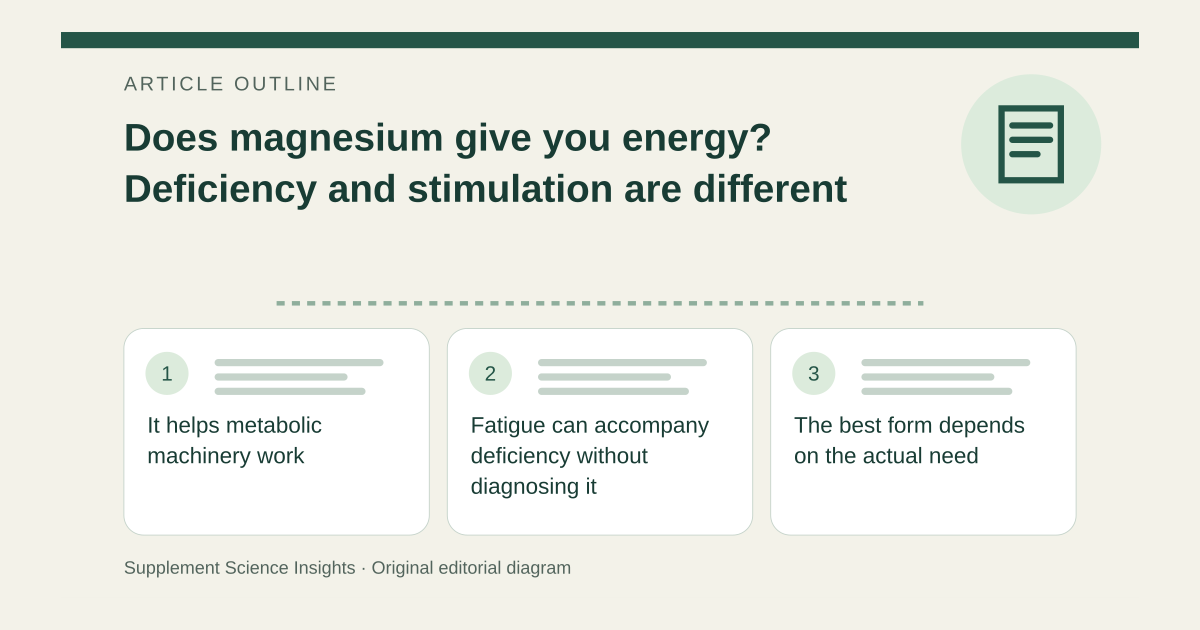
It helps metabolic machinery work
NIH describes magnesium’s roles in energy production, glycolysis and oxidative phosphorylation. The mineral supports reactions; swallowing extra does not directly supply the fuel in carbohydrate or fat. A normal biochemical role is not evidence of a caffeine-like immediate effect. [1]
Fatigue can accompany deficiency without diagnosing it
Weakness, fatigue and loss of appetite can occur with low magnesium, especially when disease, gastrointestinal losses or medicines affect status. These symptoms are not specific. A clinical history and appropriate assessment are more useful than treating fatigue alone as a deficiency test. [1]
The best form depends on the actual need
Absorption and gastrointestinal tolerance differ among preparations. None of the NIH guidance establishes glycinate, malate or another form as a universal energy winner. Count elemental magnesium, consider food intake and avoid assuming that a larger compound-weight number means a better effect. [1]
Too much can worsen how someone feels
Excess supplemental magnesium can cause diarrhea, and serious toxicity can cause lethargy and weakness, especially with impaired kidney clearance. Imagine fatigue persists despite increasing supplements: reassess the cause and exposure instead of treating every symptom as proof that the dose is still too low. [1]
| Claim | Interpretation |
|---|---|
| Supports energy metabolism | A normal nutrient role |
| Rapid energy boost | Not established by that role |
| Persistent fatigue | Needs broader assessment |
Sources for this article
- Magnesium - Health Professional Fact Sheet
Source consulted: 2026-09-21. This is a reference resource, not a claim that we conducted the studies or tested a product.