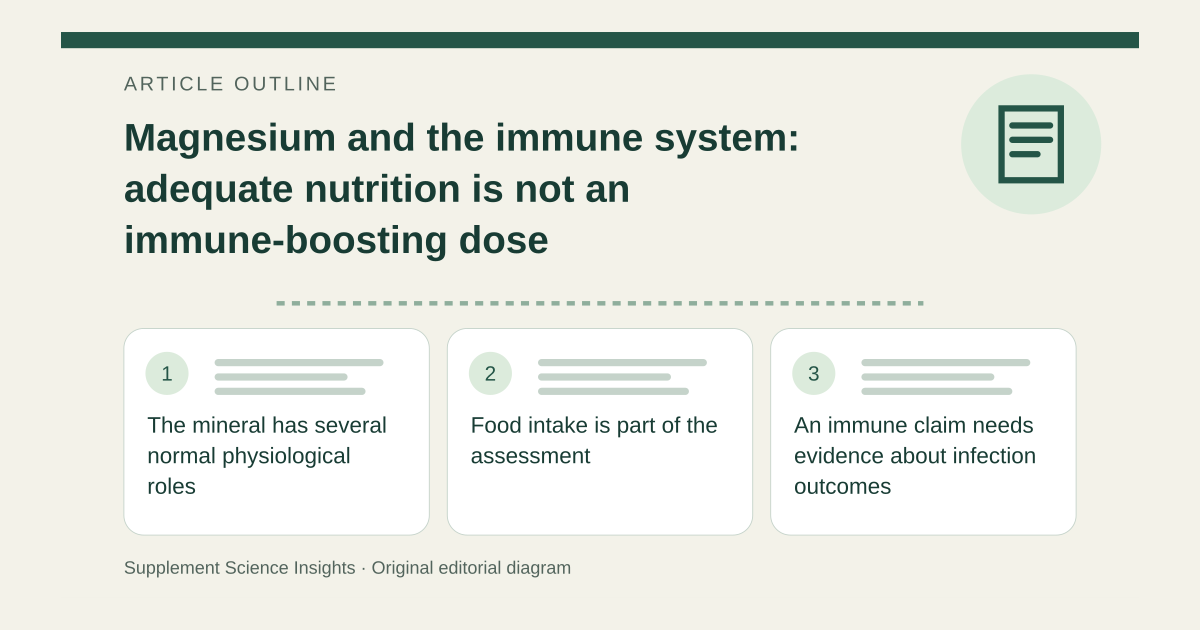
The mineral has several normal physiological roles
MedlinePlus identifies magnesium as supporting a healthy immune system alongside normal nerve, muscle, heart and bone functions. These functions explain why adequate nutrition matters. They do not specify a separate high-dose immune regimen. [1]
Food intake is part of the assessment
Magnesium occurs in foods such as legumes, nuts, seeds, whole grains and leafy vegetables. Consider the whole diet before deciding a capsule is needed. Correcting low intake differs from adding increasingly large amounts to an already adequate pattern. [2][1]
An immune claim needs evidence about infection outcomes
Normal nutrient function cannot establish that a specific supplement prevents a cold, treats a virus or improves recovery. Those claims require relevant clinical evidence rather than the word essential on a label. Do not substitute an unproven supplement plan for assessment or established treatment of an illness. [3][1]
More is not an immune-safety margin
Imagine a person combines a daily mineral capsule with magnesium-containing medicines during an illness. Count all nonfood sources and review kidney function and interactions when relevant. The adult nonfood upper limit is a safety boundary, not an immune-treatment target. [2]
| Question | Distinction |
|---|---|
| Is magnesium needed? | Normal nutritional function |
| Do I need extra? | Depends on intake and context |
| Will it treat infection? | Requires separate clinical evidence |
Sources for this article
- Magnesium in diet: MedlinePlus Medical Encyclopedia
Source consulted: 2026-09-21. This is a reference resource, not a claim that we conducted the studies or tested a product. - Magnesium - Health Professional Fact Sheet
Source consulted: 2026-09-21. This is a reference resource, not a claim that we conducted the studies or tested a product. - Dietary Supplements: What You Need to Know
Source consulted: 2026-09-21. This is a reference resource, not a claim that we conducted the studies or tested a product.