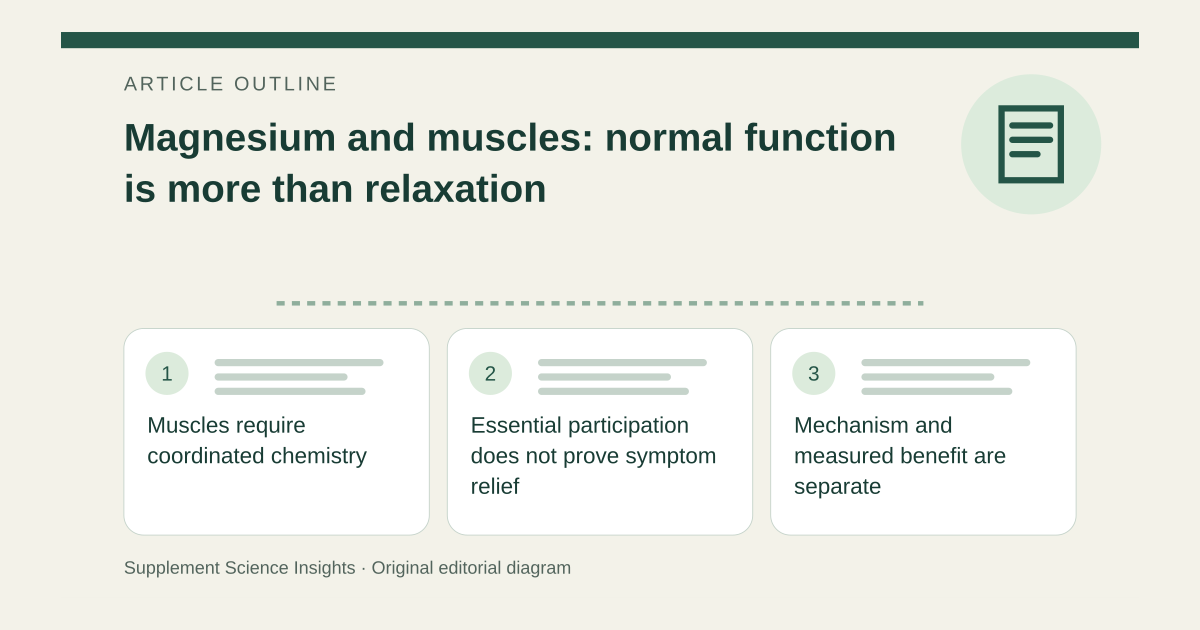
Muscles require coordinated chemistry
NIH ODS identifies magnesium as a cofactor in many enzyme systems and a participant in processes that move calcium and potassium across cell membranes. These processes contribute to nerve signaling and muscle contraction. [1]
Calling magnesium relaxing captures only a popular description, not the full physiology. Normal movement depends on regulated activation and recovery rather than simply suppressing contraction. [1]
Essential participation does not prove symptom relief
The biochemical role supports adequate nutrition. It does not establish that extra intake improves strength, treats a particular cramp disorder or shortens post-exercise soreness in someone with adequate status. [1]
Those claims need studies of the relevant population and outcome. Persistent muscle symptoms should be evaluated in context rather than automatically attributed to magnesium intake. [1]
Mechanism and measured benefit are separate
Imagine an advertisement cites magnesium-dependent enzymes to promise rapid pain relief. Enzyme participation alone does not establish that clinical response or timing.
| Detail | Interpretation |
|---|---|
| Physiology | Supports contraction and signaling |
| Extra supplementation | Separate intervention |
| Pain relief | Requires outcome evidence |
Sources for this article
- Magnesium - Health Professional Fact Sheet
Source consulted: 2026-09-18. This is a reference resource, not a claim that we conducted the studies or tested a product.