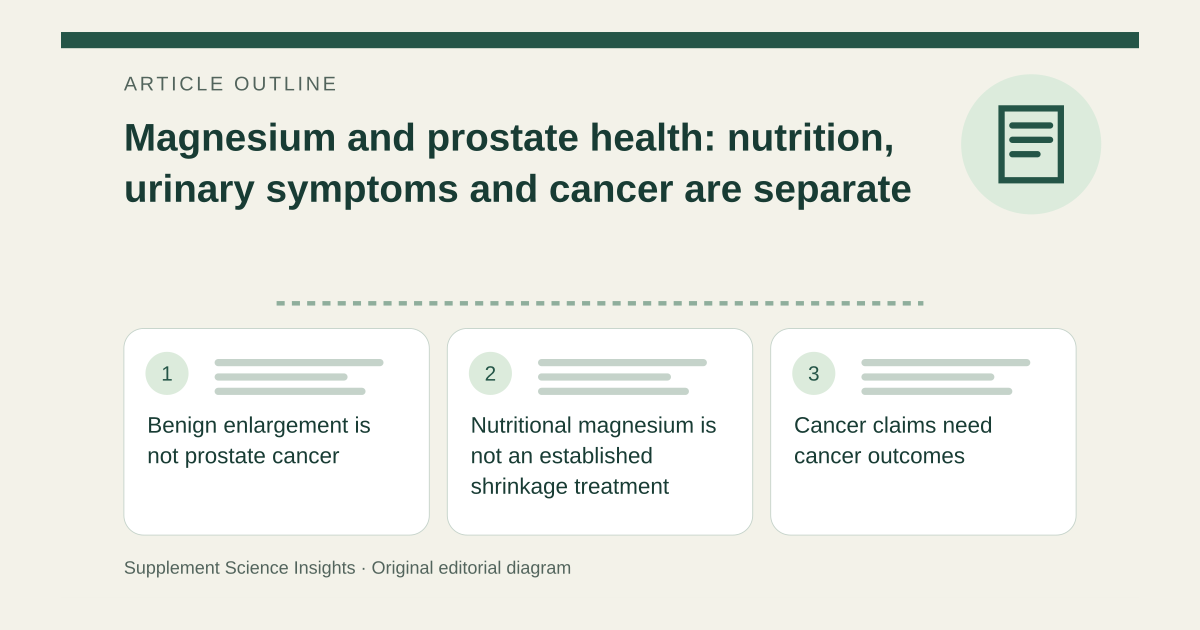
Benign enlargement is not prostate cancer
NIDDK explains that benign prostatic hyperplasia is growth that is not caused by cancer. It can affect urine flow and bladder emptying. Similar urinary symptoms can arise from infection, inflammation, bladder problems or cancer, so the symptom alone does not identify the diagnosis. [1]
Nutritional magnesium is not an established shrinkage treatment
NIH describes magnesiums normal functions, but that does not demonstrate reversal of prostate enlargement. NIDDK describes watchful waiting, medicines and procedures selected according to symptoms and complications; it does not establish a magnesium regimen as a replacement. [2][1]
Cancer claims need cancer outcomes
NCI explains that PSA changes used in some supplement research are weaker evidence than outcomes such as fewer new cancers or less recurrence. A mineral-related laboratory finding cannot establish that a magnesium product prevents or treats prostate cancer. [3]
Do not delay assessment of urinary changes
Weak flow, difficulty starting, frequent urination or incomplete emptying should be discussed with a clinician. Inability to urinate, blood in urine, severe lower abdominal discomfort, or painful urgent urination with fever or chills needs prompt care. [1]
Review the full product and the actual goal
Imagine a person with urinary symptoms buys a multi-ingredient prostate blend because it contains magnesium. The full ingredients, symptom cause and existing medicines matter. Nutrient adequacy alone does not establish relief of obstruction or cancer prevention. [1][3][2]
| Concern | Relevant endpoint |
|---|---|
| Dietary adequacy | Nutrient intake and clinical need |
| Benign enlargement | Urinary function and complications |
| PSA change | A surrogate, not definitive prevention |
| Inability to urinate | Prompt medical care |
Sources for this article
- Enlarged Prostate (Benign Prostatic Hyperplasia) - NIDDK
Source consulted: 2026-09-21. This is a reference resource, not a claim that we conducted the studies or tested a product. - Magnesium - Health Professional Fact Sheet
Source consulted: 2026-09-21. This is a reference resource, not a claim that we conducted the studies or tested a product. - Prostate Cancer, Nutrition, and Dietary Supplements - NCI
Source consulted: 2026-09-21. This is a reference resource, not a claim that we conducted the studies or tested a product.