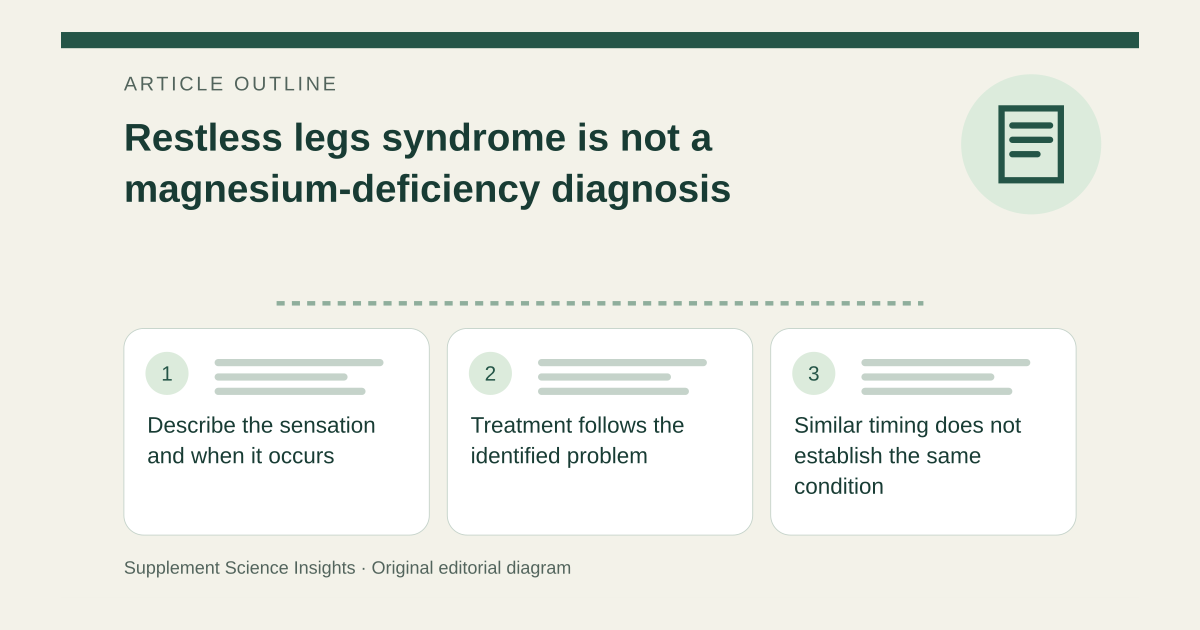
Describe the sensation and when it occurs
NINDS describes uncomfortable leg sensations with an irresistible urge to move, often emerging while sitting or trying to sleep. Movement can provide relief. That pattern is more specific than simply saying the legs hurt at night. [1]
A clinician assesses the history, medicines and possible contributors. NINDS includes iron deficiency, kidney disease and other conditions in that evaluation. The diagnosis is not made from a magnesium supplement response. [1]
Treatment follows the identified problem
Magnesium deficiency can cause muscle symptoms, but that does not make every nighttime leg complaint a magnesium problem. A cramp, an urge to move and weakness should not automatically be treated as interchangeable symptoms. [1][2]
The NINDS treatment framework includes addressing contributing conditions, lifestyle measures and selected medicines. It does not provide an established magnesium timing regimen for RLS. A bedtime label cannot substitute for determining which condition is present. [1][2]
Similar timing does not establish the same condition
Imagine one person has a brief painful cramp and another repeatedly needs to move the legs when resting. Both occur at night, but the timing alone does not establish a shared cause or treatment.
| Detail | Interpretation |
|---|---|
| Urge to move at rest | Characteristic RLS pattern |
| Painful cramp | Different description |
| Supplement timing | Does not identify the cause |
Sources for this article
- Restless Legs Syndrome | National Institute of Neurological Disorders and Stroke
Source consulted: 2026-09-19. This is a reference resource, not a claim that we conducted the studies or tested a product. - Magnesium - Health Professional Fact Sheet
Source consulted: 2026-09-19. This is a reference resource, not a claim that we conducted the studies or tested a product.