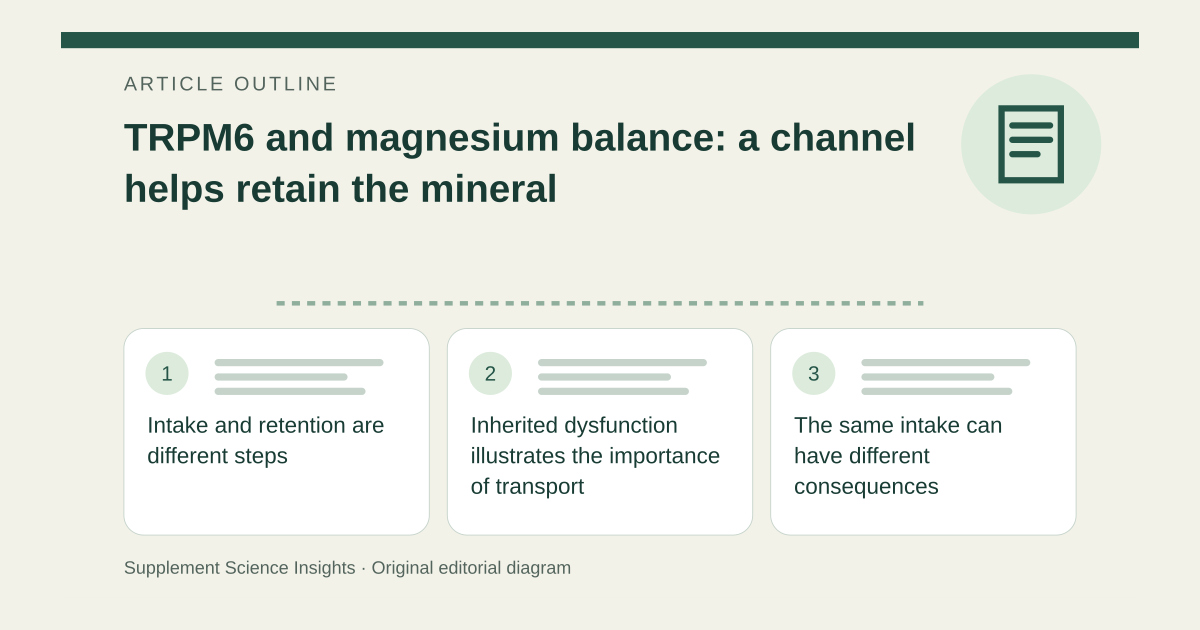
Intake and retention are different steps
MedlinePlus Genetics describes TRPM6 in intestinal epithelial cells and kidney distal convoluted tubules. The channel contributes to magnesium entry into cells and to the body’s handling of magnesium. [1]
A dietary amount therefore does not fully describe the amount retained. Absorption and renal conservation are additional parts of the balance. [1]
Inherited dysfunction illustrates the importance of transport
Pathogenic TRPM6 changes can cause hypomagnesemia with secondary hypocalcemia. Impaired intestinal absorption and excessive urinary loss contribute to the magnesium shortage; disturbed parathyroid hormone function helps link this to low calcium. [1]
This inherited condition can cause neurological problems beginning in infancy. It should not be inferred from ordinary muscle symptoms or used to claim that a supplement repairs a transporter gene. [1]
The same intake can have different consequences
Imagine comparing normal transport with a severe inherited channel defect. Identical intake need not produce identical magnesium balance, because entry and retention differ. This illustrates a mechanism, not a method for diagnosing a particular person.
| Detail | Interpretation |
|---|---|
| Diet | Supplies magnesium |
| TRPM6 | Contributes to handling |
| Gene disorder | Requires clinical evaluation |
Sources for this article
- TRPM6 gene: MedlinePlus Genetics
Source consulted: 2026-09-17. This is a reference resource, not a claim that we conducted the studies or tested a product.